If you are searching for Ayurvedic Treatment for Ankylosing Spondylitis, you are likely dealing with more than just back pain. Ankylosing Spondylitis (AS) can bring constant stiffness, reduced flexibility, fatigue, and a feeling that the spine is slowly becoming rigid. Many people in Bangalore explore Ayurveda because they want a safer, long-term approach, without depending on painkillers forever.
At Ayurhealing, the goal is not only to reduce pain for a few days. The focus is deeper: supporting inflammation control, improving mobility, strengthening digestion, and helping the body regain stability through a structured Ayurvedic Treatment plan guided by an experienced Ayurvedic doctor in Bangalore.
Why Ankylosing Spondylitis Feels Different From Normal Back Pain
Ankylosing Spondylitis is not like regular back strain. Many patients describe it as a deep, stubborn pain that is worse in the early morning, improves a little after movement, and returns after long sitting. In some people, the hips, shoulders, and ribs also feel tight. Even breathing deeply can become uncomfortable when rib joints get stiff.
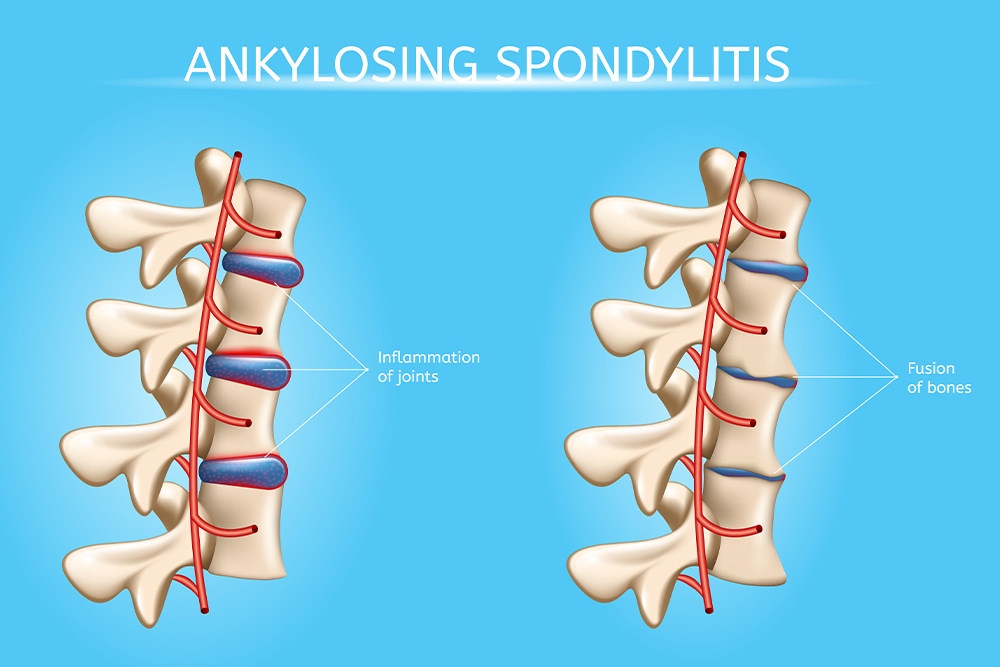
What makes AS especially challenging is that it is often linked with immune system inflammation. That is why many patients also feel tired, low on energy, and mentally drained. Over time, if inflammation remains uncontrolled, the spine may lose flexibility, and in severe cases, some vertebrae can fuse.
The most important thing to understand is this:
Ankylosing Spondylitis is not only a spine problem, but it is also a whole-body inflammatory condition.
This is exactly why Ayurveda becomes relevant. Ayurveda does not treat AS as only “joint pain.” It looks at digestion, toxins, lifestyle, immunity, stress, and inflammation patterns together.
What Is the Best Treatment for Ankylosing Spondylitis?
This is one of the most searched questions online:
“What is the best treatment for ankylosing spondylitis?”
In modern medicine, the most common treatments include anti-inflammatory drugs, biologics, and physiotherapy. These approaches can be extremely useful, especially in severe flare-ups. But many patients also feel worried about long-term dependence, stomach issues, or the emotional stress of managing a chronic condition.
That’s why people begin exploring Ayurvedic Treatment not necessarily to replace modern medicine instantly, but to support the body naturally, reduce inflammation gently, and improve quality of life.
Ayurveda’s strength is not a “quick cure.” Its strength is a structured, root-cause approach that works gradually and sustainably.
Ankylosing Spondylitis in Ayurveda: The Root-Cause View
Ayurveda explains chronic inflammatory joint and spine disorders through patterns such as Amavata and Vata Vyadhi. While the names are different, the logic is surprisingly relevant.
Ayurveda believes that when digestion becomes weak, the body produces Ama, a sticky metabolic toxin. Ama circulates through the body and tends to settle in weak areas-often joints and the spine. Once it settles, it blocks channels and triggers inflammation. Over time, Vata dosha becomes aggravated, leading to dryness, stiffness, cracking joints, and pain.
This is why many Ayurvedic doctors focus strongly on digestion and detoxification in AS.
A powerful Ayurvedic idea is:
If Ama is reduced and Vata is balanced, stiffness and pain naturally decrease.
This doesn’t mean AS disappears overnight. But it means your body becomes less inflamed, more mobile, and more resilient.
Ayurvedic Treatment for Ankylosing Spondylitis: What It Actually Includes
Many people assume Ayurveda is only about oil massage. That is a big misunderstanding. A proper Ayurvedic plan is usually built on three pillars:
1) Detox and inflammation reduction (Ama removal)
2) Vata balancing therapies for stiffness and spine support
3) Long-term strengthening of joints, digestion, and immunity
This is why choosing the best Ayurvedic hospital for Ankylosing Spondylitis in Bangalore matters. Because AS needs a medical approach.
Best Ayurvedic Hospital for Ankylosing Spondylitis in Bangalore: What You Should Look For
If you search online, you’ll see many clinics claiming they are the “best.” But Ankylosing Spondylitis requires deeper care.
A reliable Ayurvedic hospital in Bangalore should provide:
- Doctor consultation (not only therapist advice)
- Personalized therapy plan
- Panchakarma supervision
- Medicine based on the constitution and inflammation
- Diet and lifestyle guidance
At Ayurhealing, treatment is tailored to each individual after a thorough evaluation. The doctor assesses your stiffness pattern, digestive strength, sleep quality, stress levels, and whether your symptoms are more Vata-driven or Pitta-driven. That is how the plan becomes personalized.
This is also why patients searching for the best Ayurvedic doctor in Bangalore often prefer clinics that provide both classical therapies and structured follow-up.
Kerala Ayurvedic Treatment in Bangalore: Why People Prefer It
Many patients specifically search for Kerala Ayurvedic treatment in Bangalore because Kerala traditions are known for authentic Panchakarma protocols, high-quality oils, and disciplined therapy methods.
In AS, the therapy must be consistent, warm, and properly sequenced. Random oil massage can feel good temporarily, but structured Kerala-style therapy under a doctor’s guidance can offer deeper relief, especially for stiffness and restricted movement.
Panchakarma and Ankylosing Spondylitis: Why It Matters
Panchakarma is one of the most powerful parts of Ayurvedic treatment. It is not simply a “detox trend.” It is a medical system designed to remove toxins, balance doshas, and reset the body.
In Ankylosing Spondylitis, Panchakarma is often used to reduce inflammation and improve mobility. Among Panchakarma procedures, Basti therapy is considered the most important for Vata-related disorders. Vata is strongly connected to the spine, joints, and nervous system.
This is why many Ayurvedic doctors say:
Basti is the backbone therapy for chronic stiffness and spinal pain.
Panchakarma is not the same for every patient. Some require deeper detox, while others need gentler therapies based on their strength and digestive capacity.
The Role of Ayurvedic Therapies in Reducing Stiffness and Pain
The therapies used in AS are designed to do something very specific: soften rigidity, improve circulation, reduce inflammation, and restore movement.
At a high-quality Ayurvedic clinic in Bangalore, therapies are often combined for better results. Warm oil therapies help lubricate tissues, steam therapies help loosen tight joints, and localized procedures target the lower back and hips.
Over time, patients often notice:
- Improved flexibility
- Better sleep
- Reduced pain during movement
- Improved energy and mood
This is not magic. It is the result of consistent therapy, corrected digestion, and reduced inflammatory load.
Permanent Treatment for Ankylosing Spondylitis: What Is Realistic?
Many people search for permanent treatment for Ankylosing Spondylitis, and that is completely understandable. Nobody wants to live with a condition forever.
Ayurvedic Treatment for Ankylosing Spondylitis in Bangalore: Realistic Healing Goals
- Ankylosing Spondylitis (AS) is usually a long-term autoimmune inflammatory condition that affects the spine, joints, and overall mobility.
- In modern medicine, there is no guaranteed permanent cure for Ankylosing Spondylitis.
- However, Ayurvedic treatment for Ankylosing Spondylitis in Bangalore can still offer strong and meaningful support.
- Ayurveda can help with long-term symptom control by reducing pain, stiffness, and fatigue.
- It also supports improved mobility and flexibility in the spine and joints, making daily movement easier.
- Through dosha-balancing and detox therapies, Ayurveda may help reduce inflammation naturally.
- In addition, it improves digestion and helps reduce toxins (Ama), which supports the body’s healing process.
- Overall, this can improve quality of life by boosting energy levels and helping with better daily functioning.
- Many patients undergoing consistent Ayurvedic care experience long periods of remission, where symptoms become mild and manageable.
- Ayurvedic treatment can help you live with AS in a much better way, often with reduced dependence on strong medications.
- With the right approach, a structured Ayurvedic plan supported by an experienced Ayurvedic doctor in Bangalore can help manage AS more naturally and sustainably.
How Did I Cure My Ankylosing Spondylitis Naturally?
Here’s the truth: when someone says they “cured” AS naturally, what they often mean is:
- Their pain reduced drastically
- Their stiffness improved
- Their inflammation markers improved
- They regained mobility
- Their flare-ups became rare
This is possible when the treatment is consistent, and the lifestyle is corrected.
Ayurveda supports this process by working on:
- Inflammation
- Stress regulation
- Daily movement
- Sleep recovery
Ayurveda may not change genetics, but it can change the body’s inflammation response.
Vitamins and Ankylosing Spondylitis: What People Ask Most
Which Vitamin Is Best for Ankylosing Spondylitis?
This is a very common question. While vitamins don’t “treat” AS directly, they play a strong supportive role.
Most doctors commonly recommend checking:
- Vitamin D
- Vitamin B12
- Calcium levels
Among these, Vitamin D is often considered most important because AS patients may have low levels, and Vitamin D is linked with immune balance and bone strength.
What Vitamin Deficiency Causes Ankylosing Spondylitis?
This is where many people get confused.
No vitamin deficiency directly causes AS. AS is more strongly connected to:
- Genetics
- Immune system inflammation
- Environmental triggers
However, Vitamin D deficiency is common and may worsen pain sensitivity, fatigue, and bone weakness.
How to Stop Ankylosing Spondylitis From Progressing
This is one of the most important goals for every AS patient.
Progression control depends on three things:
- Controlling inflammation
- Maintaining movement and posture
- Preventing long-term stiffness buildup
Ayurveda supports progression control by:
- reducing chronic inflammation
- improving flexibility through therapies
- strengthening digestion and immunity
- improving sleep and mental balance
A very important truth:
The spine becomes stiffer when you stop moving. Movement is medicine for AS.
That’s why Ayurvedic treatment works best when combined with doctor-guided stretching, physiotherapy, and lifestyle correction.
Ayurhealing: A Structured Ayurvedic Approach in Bangalore
If you are searching for the best Ayurvedic hospital in Bangalore, the best Ayurvedic hospital for Ankylosing Spondylitis in Bangalore, the best Ayurvedic clinic in Bangalore, or a trusted Ayurvedic doctor in Bangalore, you are likely looking for a place that treats Ankylosing Spondylitis (AS) as a serious medical condition, not as a simple relaxation issue. AS is chronic, progressive, and often unpredictable, which is why it requires a structured and consistent healing plan. At Ayurhealing, the focus is on long-term improvement by addressing inflammation, stiffness, mobility, digestion, and dosha imbalance through an authentic Ayurvedic approach.
At Ayurhealing, Ankylosing Spondylitis is managed through a step-by-step treatment model that includes doctor-led evaluation, personalized therapy protocols, Panchakarma-based planning, and supportive lifestyle guidance. This structured approach is essential because AS does not improve with occasional therapy alone; it improves when treatment is consistent, monitored, and customized over time.
What Makes Ayurhealing’s AS Approach Different
- Doctor-supervised evaluation and diagnosis
- Personalized therapies based on your condition and body type
- Long-term follow-up for sustainable progress
Core Elements Included in the Treatment Plan
- Panchakarma-based detox and inflammation management
- Diet correction to reduce Ama (toxins) and improve digestion
- Lifestyle guidance to support mobility, posture, and recovery
Why Consistency Matters in Ankylosing Spondylitis
- AS symptoms fluctuate, so treatment must adapt
- Healing requires steady therapy, not short-term sessions
- Long-term care improves flexibility, stiffness, and daily function
Ayurveda vs Symptom-Only Treatment
| Approach | Focus | Long-Term Value |
| Symptom-only care | Pain suppression | Helps flares but may not improve root causes |
| Ayurvedic Treatment | Root imbalance + inflammation | Supports mobility, digestion, and long-term stability |
Final Thoughts: Ankylosing Spondylitis Can Improve With the Right Care
Ankylosing Spondylitis can feel frustrating because it often affects young adults and interferes with work, travel, sleep, and confidence. But with the right approach, symptoms can improve significantly.
Ayurvedic Treatment for Ankylosing Spondylitis offers a natural path to reduce stiffness, support mobility, and improve quality of life. It focuses on inflammation control, digestive correction, detoxification, and long-term strengthening.
If you are looking for the best Ayurvedic hospital for Ankylosing Spondylitis in Bangalore, Ayurhealing provides a doctor-guided, structured approach designed for real long-term improvement.