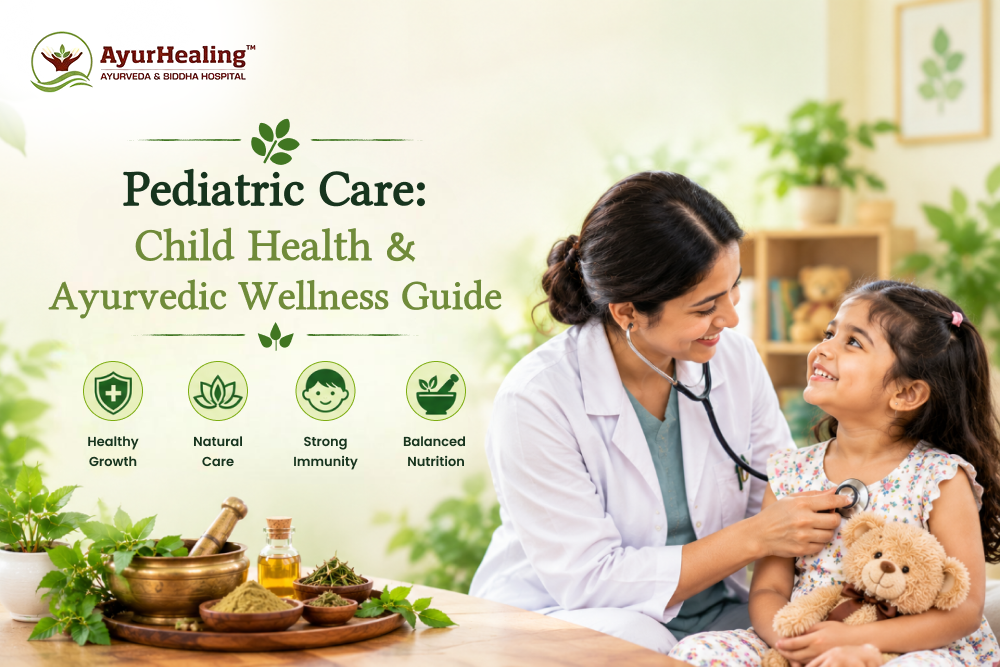
Key Takeaways
- Pediatric care includes preventive check-ups, immunisation, nutrition, developmental monitoring and treatment when a child is unwell.
- Good sleep, balanced nutrition, physical activity, emotional security and timely medical care support healthy growth.
- Ayurveda has traditional approaches to child wellness, but evidence for many pediatric uses is limited.
- Children may be more vulnerable to adverse effects from medicines and herbal products. “Natural” does not automatically mean safe.
- Consult a pediatrician before giving a child Ayurvedic medicines, supplements or intensive therapies.
- Seek urgent medical help for serious symptoms such as breathing difficulty, seizures, severe dehydration or sudden weakness.
What Is Pediatric Care, and Can Ayurveda Support Children’s Health?
Pediatric care focuses on a child’s growth, development, prevention of illness and treatment of health conditions from birth through adolescence. Ayurveda is a traditional system of healthcare that some families explore for wellness support. However, Ayurvedic treatment for pediatric care should be considered cautiously, with a qualified pediatric healthcare professional involved. It should never replace vaccinations, necessary medical treatment or urgent care.
What Does Pediatric Care Include?
Pediatric care is more than treating a fever or infection. It supports children through different stages of physical, emotional and developmental growth.
Routine pediatric care may include:
- Growth monitoring: Tracking height, weight and development over time.
- Immunisation: Following the recommended vaccination schedule.
- Nutrition guidance: Supporting age-appropriate feeding and balanced meals.
- Developmental screening: Checking milestones, communication, movement and social development.
- Illness assessment: Identifying and treating infections, injuries and other health concerns.
- Emotional and behavioural support: Helping families address sleep, stress, behaviour and school-related concerns.
The World Health Organization emphasises that children need adequate nutrition, good health, safety, responsive caregiving and opportunities to learn. Immunisation and timely care during illness are also important parts of healthy growth.
How Can Parents Support Their Child’s Everyday Health?
Small, consistent habits can help create a healthy foundation. Children’s needs change with age, so routines should be flexible and suited to their developmental stage.
1. Offer balanced, age-appropriate meals
Include a variety of foods from different food groups, such as vegetables, fruits, grains, protein-rich foods and suitable dairy or alternatives. Follow professional guidance for infant feeding and introducing complementary foods.
Avoid restrictive diets or herbal supplements intended to improve growth unless a qualified healthcare professional recommends them. If your child has poor appetite, difficulty gaining weight or ongoing digestive symptoms, seek an assessment rather than relying on home remedies.
2. Build a steady sleep routine
Regular sleep supports learning, mood and physical health. Keep bedtime routines predictable and adjust sleep expectations to your child’s age. If persistent snoring, breathing pauses or severe sleep difficulties occur, discuss them with a pediatrician.
3. Encourage movement and play
Play supports coordination, strength, social skills and confidence. Encourage age-appropriate movement and outdoor play while ensuring safe supervision. Children with pain, mobility difficulties or medical conditions may need an individually adapted activity plan.
4. Support emotional well-being
Children benefit from feeling safe, heard and supported. Make time to talk, listen without dismissing concerns and maintain routines where possible. Persistent anxiety, withdrawal, behavioural changes or difficulties at school may warrant professional guidance.
EVERYDAY CHILD WELLNESS
WHEN EXTRA SUPPORT
IS NEEDED
What Is the Role of Ayurveda in Pediatric Care?
Ayurveda is a traditional Indian healthcare system that considers diet, daily routines, individual constitution and selected therapies. Some families explore Ayurvedic approaches for general wellness or alongside conventional care.
However, traditional use does not establish that a treatment is safe or effective for children. Scientific evidence for many Ayurvedic pediatric interventions is limited, and a child’s age, weight, health conditions and other medicines can affect treatment safety.
Ayurvedic treatment for pediatric care: What should parents know?
Before considering any Ayurvedic product or procedure for a child, discuss it with the child’s pediatrician. If you consult an Ayurvedic practitioner, verify their qualifications and ask whether they have specific experience working with children.
Ask these questions before starting:
- What is the exact purpose of the proposed treatment?
- What ingredients, dose and duration are recommended?
- Is there reliable evidence for this use in children of my child’s age?
- What side effects or interactions are possible?
- How will we monitor whether it is helping?
- Could it delay a treatment that is known to be effective?
The American Academy of Pediatrics advises families to involve their child’s pediatrician when considering complementary therapies, so potential benefits, risks and interactions can be assessed.
Are Ayurvedic medicines safe for children?
Not automatically. Some Ayurvedic preparations may contain lead, mercury or arsenic in potentially harmful amounts. Product quality and ingredients can vary, and children may be especially vulnerable to toxic exposures.
Do not give children adult formulations, products with unclear ingredients or medicines recommended through unverified online claims. Keep all medicines and supplements out of children’s reach.
What About Panchakarma and Other Ayurvedic Therapies for Children?
Panchakarma is a group of traditional Ayurvedic procedures. Methods may include procedures involving cleansing or other intensive interventions. These are not routine pediatric wellness practices, and their safety and usefulness for children are not established for many conditions.
Ayurvedic treatment for Panchakarma should not be assumed suitable for children. Do not attempt purgation, enemas, fasting or other intensive procedures at home. Discuss any proposed therapy with the child’s pediatrician and a qualified practitioner, including the potential risks and alternatives.
Gentle routines, balanced meals, adequate sleep and age-appropriate activity are generally more practical foundations for everyday wellness than intensive cleansing procedures.
When Should a Child See a Pediatrician?
Parents should seek professional advice when symptoms persist, recur, interfere with daily life or raise concerns about growth or development.
| Concern | What parents can do |
| Persistent fever, cough or pain | Contact a pediatrician for assessment, especially if symptoms worsen |
| Poor appetite or growth concerns | Arrange a growth and nutrition review |
| Repeated vomiting or diarrhea | Seek advice about hydration and the cause |
| Developmental or learning concerns | Discuss milestones and possible screening |
| Ongoing joint, back or movement problems | Arrange assessment before trying therapies or exercises |
| Sudden severe symptoms | Seek urgent or emergency medical care |
What symptoms need urgent medical attention?
Seek emergency care if a child has difficulty breathing, becomes unusually difficult to wake, has a seizure, shows signs of severe dehydration, develops sudden weakness or has another rapidly worsening or life-threatening symptom.
For suspected strokes-such as sudden facial drooping, weakness on one side, difficulty speaking, sudden loss of balance or a sudden severe headache-call emergency services immediately. Do not delay emergency assessment to try Ayurvedic treatment.
A Parent’s Decision Guide to Child Health and Wellness
Use this simple structure to decide what kind of support may be appropriate. It is educational and does not replace medical advice.
Notice a health or wellness concern
Is there an emergency warning sign?
- Yes: Seek emergency medical care immediately.
- No: Continue below.
Is the concern persistent, recurring or affecting growth, sleep, eating, movement or daily activities?
- Yes: Arrange a pediatric assessment.
- No: Monitor symptoms and maintain supportive daily routines.
Considering complementary or Ayurvedic care?
- Discuss it with the pediatrician first.
- Verify the practitioner’s qualifications and child-specific experience.
- Review ingredients, evidence, risks and interactions.
- Do not stop or delay prescribed treatment.
Follow up and reassess
Track symptoms and development, and seek further advice if the child worsens or the plan is not helping.
How Do Related Health Concerns Fit Into Pediatric Care?
Children’s symptoms should be assessed according to their age, development and individual medical history. Adult treatment approaches should not simply be transferred to children.
- Spine health: Back pain, posture concerns or movement difficulties in children deserve appropriate assessment. Ayurvedic treatment for spine health should not replace evaluation for injury, infection, neurological symptoms or other underlying causes.
- Joint care: Persistent joint pain, swelling, stiffness or limping should be assessed by a pediatric healthcare professional. Ayurvedic treatment for joint care should only be considered after discussing the diagnosis and safety.
- Digestive concerns: Ongoing constipation, abdominal pain, vomiting or poor growth may require medical evaluation. Gut health care treatment should be based on the child’s symptoms and diagnosis, not on unsupported “detox” claims.
- Stroke: Pediatric stroke is a medical emergency. Ayurvedic treatment for stroke is not a substitute for emergency assessment, imaging or specialist-led treatment and rehabilitation.
How Can Families Choose a Healthcare Provider in Bangalore?
When choosing a provider for a child in Bangalore, prioritise child-specific experience, clear communication and coordination with conventional pediatric care.
| What to check | Questions to ask |
| Qualifications | Is the practitioner appropriately qualified and registered? |
| Pediatric experience | Do they have experience assessing children of my child’s age? |
| Assessment | Will they review symptoms, medical history and current medicines? |
| Treatment rationale | What is being recommended, and what evidence supports it? |
| Safety | What are the risks, side effects and possible interactions? |
| Coordination | Will they work with the child’s pediatrician when needed? |
| Follow-up | How will progress be reviewed, and when should we seek further care? |
The Best Ayurvedic Hospital in Bangalore for a family is not necessarily the one making the strongest promises. Look for transparent information, appropriate qualifications, realistic expectations and a willingness to involve the child’s pediatrician.
Conclusion: Supporting Children’s Health With Informed Care
Children thrive when they receive attentive care, nutritious food, adequate sleep, opportunities to play and timely medical support. Parents can build these foundations through everyday routines while staying alert to symptoms that need professional assessment.
Ayurveda is part of India’s traditional healthcare heritage, and some families may wish to explore it as complementary care. For children, however, safety and evidence must come first. Discuss medicines and procedures with your child’s pediatrician, avoid unverified products and never delay necessary treatment.
At Ayurhealing, we encourage families to make informed decisions and confirm the suitability of any service before proceeding. Contact Ayurhealing to enquire about current services and discuss your questions with the team.