Key Takeaways
- Understanding Sinusitis: Sinusitis causes inflammation of the sinus lining, leading to nasal congestion, facial pressure, headaches and reduced sense of smell.
- Ayurvedic Perspective: Ayurveda traditionally associates recurring sinus-related complaints with conditions such as Dushta Pratishyaya and imbalances involving Kapha and Vata Doshas.
- Role of Nasya Therapy: Nasya is a traditional Ayurvedic therapy that involves administering prescribed oils or herbal preparations through the nostrils. It may be considered as a supportive approach for selected individuals.
- Benefits of Anu Taila Nasya: Anu Taila is one of the traditional oils used in Nasya therapy. Its suitability depends on individual health and professional assessment.
- Who Should Avoid Nasya: People with fever, acute infections, pregnancy, recent nasal surgery or certain medical conditions may need to avoid or postpone the therapy.
- Home Care for Sinusitis: Staying hydrated, using saline nasal rinses safely, avoiding dust and smoke, and maintaining healthy lifestyle habits may help manage sinus discomfort.
- Importance of Medical Guidance: Chronic or recurring sinusitis requires proper evaluation. Ayurvedic therapies should not replace necessary medical treatment or ENT consultation.
- Choosing the Right Ayurvedic Care: Consulting a qualified practitioner at a trusted healthcare facility, such as Ayurhealing Ayurveda & Siddha Hospital in Bangalore, can help you understand suitable treatment options.
Can Ayurveda Help With Sinusitis?
Ayurvedic Treatment for Sinusitis focuses on managing nasal congestion, sinus pressure and recurring discomfort through personalised therapies and traditional medicines. Choosing the Best Ayurvedic Hospital in Bangalore can help ensure proper assessment and individualised care. Nasya is traditionally used for nasal and sinus-related complaints, but it may not be suitable for everyone. Consult a qualified Ayurvedic doctor before starting the therapy.
Why Does Sinusitis Get Worse in Winter?
Many people experience recurring sinus problems during winter, particularly in December and January. Cool mornings, dry air, seasonal respiratory infections and spending long hours in air-conditioned environments can contribute to nasal discomfort and congestion.
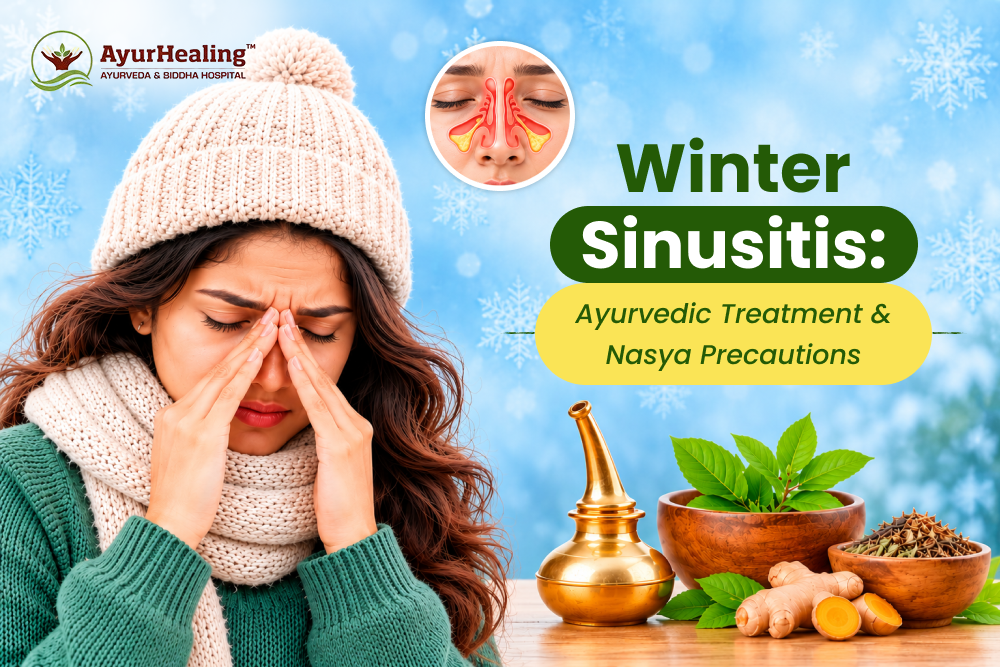
Sinusitis occurs when the lining of the sinuses, which are the air-filled spaces behind your cheeks, forehead and eyes, becomes inflamed or swollen.
Common symptoms of sinusitis include:
- Pain or pressure around the cheeks, eyes or forehead.
- A blocked or runny nose, sometimes with thick mucus.
- Reduced sense of smell.
- Headaches that may feel worse when bending forward.
- Post-nasal drip and throat irritation.
- Facial heaviness and difficulty breathing through the nose.
Most cases of acute sinusitis develop after a common cold and improve within a few weeks. However, when symptoms continue for 12 weeks or longer, the condition is generally classified as chronic sinusitis.
The Ayurvedic Perspective
In Ayurveda, recurring sinus-related complaints are traditionally associated with conditions such as Dushta Pratishyaya. An imbalance involving Kapha and Vata Doshas is considered relevant to excessive mucus, nasal congestion and heaviness in the head.
From an Ayurvedic perspective, seasonal changes, dietary habits and lifestyle patterns may influence these symptoms. This is why traditional Ayurvedic approaches focus on individual assessment and therapies for the region above the collarbones.
Nasya is one of the important traditional therapies considered in this context.
What Is Nasya and How Does It Help With Sinusitis?
Nasya is an Ayurvedic therapy that involves administering medicated oils, herbal preparations or other prescribed substances through the nostrils.
Classical Ayurvedic texts describe Nasya as a therapy for conditions affecting the region above the collarbones, including certain nasal complaints traditionally associated with Pinasa.
Anu Taila is one of the traditional oils used in Nasya therapy. However, the preparation and dosage depend on the individual’s condition and the Ayurvedic doctor’s assessment.
What Happens During a Nasya Therapy Session?
A typical clinic session may take approximately 30-45 minutes, depending on the treatment protocol.
The process generally involves:
- Initial Assessment: The Ayurvedic doctor evaluates your symptoms, medical history, general health and current medications before recommending Nasya.
- Face and Head Massage: A gentle massage with suitable oil may be performed around the face, forehead and neck.
- Steam Preparation: Mild facial steam may be used as part of the traditional preparation process.
- Nasya Administration: The patient lies in a suitable position while the prescribed preparation is administered into the nostrils in a measured quantity.
- Post-Treatment Care: The patient may be asked to clear secretions from the throat and follow the doctor’s recommended aftercare instructions.
- Rest and Recovery: A short period of rest follows the procedure. The doctor may advise avoiding certain activities or environmental triggers temporarily.
The number of sessions and duration of treatment vary according to the type of Nasya, individual health and clinical assessment. A seven-day course is used in some treatment protocols, but it is not a universal requirement.
Who Can Benefit From Nasya for Sinusitis?
Nasya may be considered as a supportive Ayurvedic therapy for selected adults experiencing recurring nasal and sinus-related complaints.
It may be considered for:
- Adults experiencing long-standing or recurring nasal congestion.
- People reporting heaviness in the head and facial discomfort.
- Individuals experiencing recurring post-nasal drip.
- People with seasonal nasal complaints or associated allergies, following an appropriate assessment.
- Individuals exploring Ayurvedic Treatment for Sinusitis alongside appropriate medical care.
Some small Ayurvedic studies have investigated Anu Taila Nasya in combination with other interventions for chronic sinus-related complaints. However, the available evidence is limited, and larger controlled studies are needed to establish its effectiveness.
Nasya should therefore be considered a supportive traditional therapy rather than a proven cure or replacement for conventional sinusitis treatment.
Who Should Avoid Nasya Therapy?
Although Nasya is an established traditional Ayurvedic procedure, it is not appropriate for every individual.
Certain situations may require postponing the therapy or choosing a different approach.
| Health condition or situation | Precaution |
| Pregnancy or recent childbirth | Avoid or postpone unless specifically assessed by a qualified practitioner |
| Menstruation | Some traditional protocols recommend postponing therapeutic Nasya |
| Children and older adults | Require age-appropriate assessment and supervision |
| Fever, flu or acute infection | Generally postpone therapeutic Nasya until recovery |
| Immediately after eating | Follow the prescribed timing and preparation instructions |
| Recent bathing or strenuous exercise | Allow adequate rest before treatment |
| Alcohol consumption | Avoid treatment while intoxicated |
| Nose injury, frequent nosebleeds or recent nasal surgery | Medical assessment is necessary |
| Epilepsy, uncontrolled blood pressure or bleeding disorders | Requires individual medical evaluation |
| Severe weakness or recent illness | The doctor must assess whether the therapy is appropriate |
Nasya may also cause temporary effects such as sneezing, nasal irritation, watery eyes or a burning sensation. Persistent discomfort, severe headache, fever or breathing difficulties should be reported to a healthcare professional.
Important: Different forms of Nasya have different indications and precautions. These restrictions should not be treated as identical for every preparation or procedure. Never attempt therapeutic Nasya without professional guidance.
What Can You Do at Home to Manage Sinusitis During Winter?
Along with appropriate medical care, certain everyday habits may help manage nasal discomfort during winter.
Here are some practical measures:
- Drink Warm Fluids: Warm water, light soups and other fluids can help maintain hydration.
- Use Saline Nasal Rinses: Saline irrigation may help clear nasal secretions. Always use sterile, distilled or previously boiled and cooled water.
- Avoid Dust and Smoke: Limit exposure to pollution, cigarette smoke and other environmental irritants.
- Maintain Indoor Air Quality: Keep living and working spaces clean and avoid excessive exposure to dry air.
- Eat Balanced Meals: Choose nutritious meals and maintain regular eating habits. Traditional Ayurveda may recommend warm, freshly prepared foods during winter.
- Get Adequate Sleep: Proper rest supports general health and recovery.
- Stay Hydrated: Drinking sufficient water helps prevent dehydration and keeps mucus from becoming excessively thick.
Steam inhalation is sometimes used for temporary comfort, but evidence for its effectiveness in treating sinusitis is limited. Avoid bowls of boiling water because of the risk of burns.
Do not use strong Nasya oils or medicated nasal preparations at home without professional advice. Gentle daily practices such as Pratimarsha Nasya are different from therapeutic Nasya and are not automatically suitable for everyone.
Ayurvedic Treatment for Sinusitis at Ayurhealing
Choosing the right approach to sinus care begins with understanding individual symptoms, health history and contributing factors. Consulting the Best Ayurvedic Hospital in Bangalore can help ensure personalised guidance and appropriate care.
At Ayurhealing Ayurveda & Siddha Hospital, located in Koramangala, Bangalore, the approach to personalised Ayurvedic healthcare is guided by individual assessment and the patient’s overall health requirements.
Under the guidance of Dr. Mini Nair, treatment recommendations should be based on the patient’s condition rather than following the same treatment protocol for everyone.
Depending on the clinical assessment, an Ayurvedic doctor may consider:
- Understanding the duration and frequency of sinus symptoms.
- Assessing nasal congestion, facial discomfort and other associated complaints.
- Reviewing existing medical conditions and medications.
- Considering whether traditional therapies such as Nasya are appropriate.
- Recommending suitable dietary and lifestyle modifications.
- Advising medical or ENT consultation when symptoms require further investigation.
The choice of medicines, therapies and treatment duration depends on individual requirements. Patients should also be informed about possible risks, expected outcomes and the limitations of Ayurvedic treatment.
If you are exploring Ayurvedic Treatment for Sinusitis in Bangalore, a professional consultation can help you understand the available treatment options.
When Should You See a Doctor for Sinusitis?
Although many sinus infections improve with time, certain symptoms require immediate medical attention.
Seek urgent medical care if you experience:
- Swelling or redness around one or both eyes.
- Double vision, blurred vision or difficulty moving the eyes.
- Severe headache, stiff neck or confusion.
- High fever or feeling seriously unwell.
- Rapidly worsening symptoms.
- Persistent one-sided facial symptoms or unexplained nasal bleeding.
- Sinus symptoms accompanied by a weakened immune system.
You should also consult a healthcare professional if symptoms last longer than expected, keep returning or fail to improve with appropriate treatment.
Do not delay conventional medical evaluation in favour of Ayurvedic therapy when warning signs are present.
Conclusion
Winter can make recurring nasal congestion and sinus discomfort difficult to manage, particularly for people who experience seasonal or long-standing sinus problems.
Ayurveda offers traditional approaches such as Nasya, along with personalised medicines and lifestyle recommendations, for selected individuals. However, understanding who can benefit from these therapies and who should avoid them is equally important.
If you are considering Ayurvedic Treatment for Sinusitis, begin with a proper consultation and understand the benefits, precautions and limitations of each treatment option.
At Ayurhealing, a Best Ayurvedic Hospital in Bangalore, patients can explore personalised Ayurvedic and Siddha healthcare under the guidance of Dr. Mini Nair.
Contact Ayurhealing to learn more about Ayurhealing and its healthcare approach.