Best Ayurvedic Immunity Booster: Natural Ways to Strengthen Your Immune System

In today’s fast-paced world, falling sick often and feeling low on energy has become common. This is why more people are turning to a trusted Ayurvedic Immunity Booster to strengthen their body from within. Unlike quick-fix solutions, Ayurveda focuses on building long-term resistance against illness by balancing the body, mind, and digestion. At Ayurhealing, a leading Ayurvedic clinic in Bangalore, we help people rediscover this ancient wisdom through personalised care rooted in centuries-old practices.

This blog explains how Ayurveda looks at immunity, which herbs and habits genuinely help, and how you can begin building stronger, natural immunity today.

Understanding Immunity the Ayurvedic Way

Ayurveda calls the body’s natural defence mechanism Vyadhi Kshamatva, which loosely translates to the capacity to resist disease. This concept goes beyond simply fighting infections – it includes how well your body recovers, repairs, and stays in balance over time.

According to Ayurveda and immunity principles, true immunity is not built overnight with a single herb or tablet. It is the result of Dosha balance, strong digestive fire (Agni), proper sleep, and a diet suited to your body type. When these elements work together, the body naturally becomes more resilient to seasonal infections, fatigue, and chronic illness.

How Ayurveda Improves Immunity Naturally

Ayurveda approaches immunity holistically rather than treating symptoms in isolation. Here is how to improve immunity ayurveda style, through a few core principles:

1. Balancing the Three Doshas

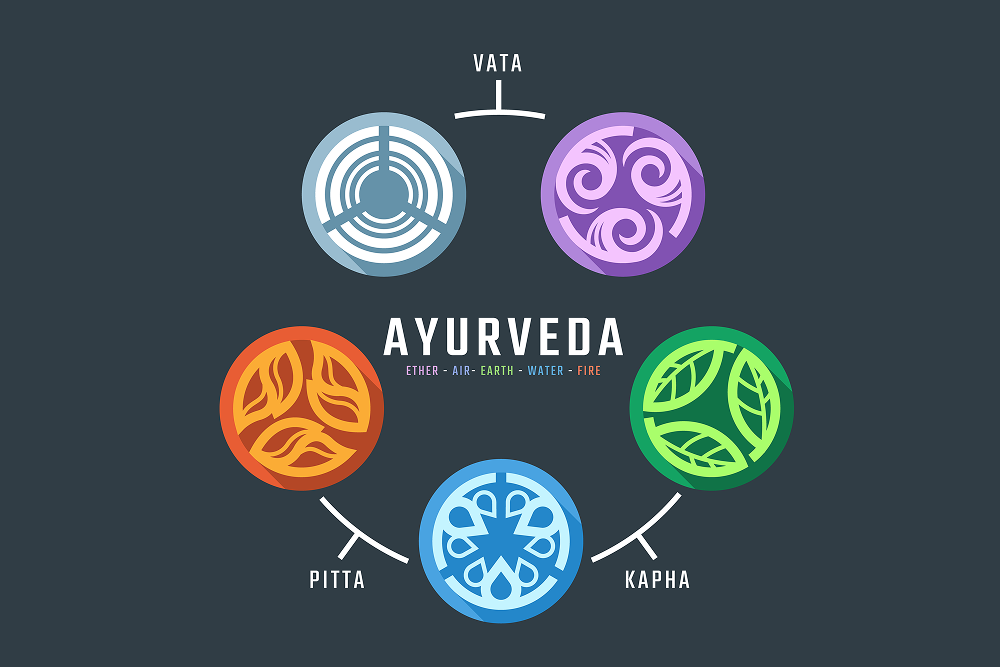
Every person has a unique combination of Vata, Pitta, and Kapha doshas. When one dosha becomes excessive, it disturbs the body’s internal balance and weakens immunity. Ayurvedic doctors assess your dosha type before recommending herbs, diet, or lifestyle changes, ensuring the approach is personalised rather than generic.

2. Strengthening Digestion (Agni)

Ayurveda strongly links healthy digestion to strong immunity. Poor digestion leads to the accumulation of toxins, known as Ama, which weakens the body’s defences. Eating warm, freshly cooked meals, avoiding overeating, and including digestive spices like ginger, cumin, and black pepper can significantly improve gut health.

3. Following a Balanced Diet

A balanced diet built around seasonal, fresh, and easily digestible foods supports the body’s ability to fight illness. Ayurveda recommends reducing processed food, excess sugar, and cold beverages, which are believed to dull digestive fire and slow down recovery.

Best Ayurvedic Herbs for Immunity

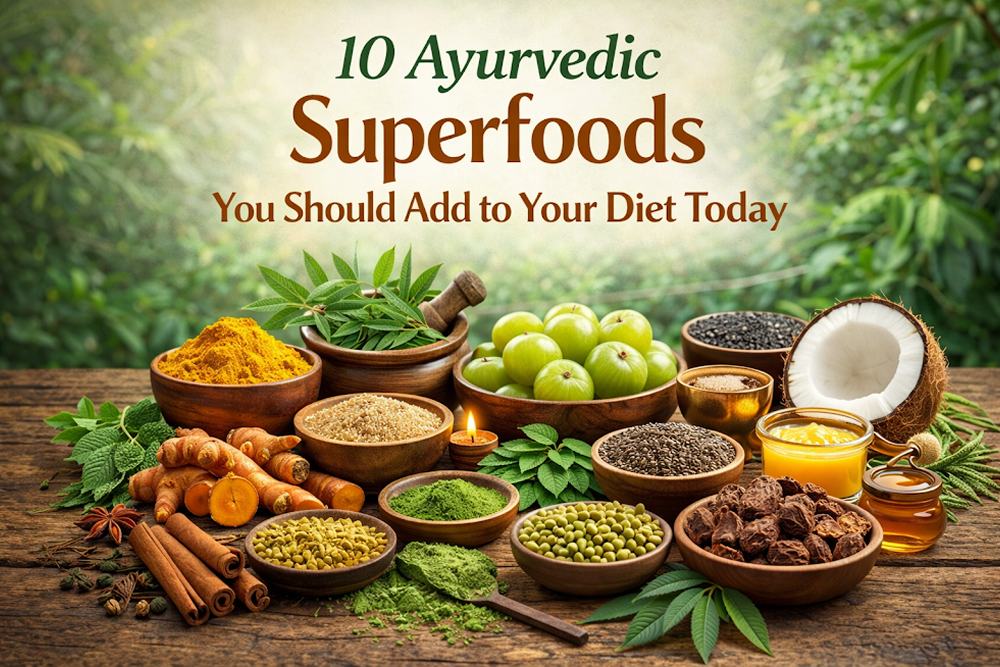
When people search for the best ayurvedic medicine for immunity, they are usually looking for herbs that have been used safely for generations. Some of the most effective options include:

  • Ashwagandha – known for reducing stress and supporting the body’s natural recovery process.
  • Tulsi (Holy Basil) – widely used to support respiratory health and fight seasonal infections.
  • Giloy (Guduchi) – often recommended during fevers and infections for its restorative properties.
  • Amla (Indian Gooseberry) – rich in natural Vitamin C and used to strengthen overall vitality.
  • Turmeric – valued for its role in supporting the body’s natural healing response.

These herbs, when used correctly under professional guidance, form the foundation of an effective immunity booster Ayurvedic regimen. It is important to consult a qualified doctor before starting any herbal formulation, as dosage and combination matter significantly.

Many people assume that more herbs automatically mean better results, but Ayurveda emphasises the opposite: the right herb, in the right quantity, for the right body type. This is why combinations that work well for one person may not suit another, and why a personal consultation matters far more than following generic recommendations found online.

Ayurvedic Medicine for Immunity Power

Beyond single herbs, Ayurveda also offers classical formulations designed specifically to enhance the body’s resistance. Products containing a blend of Chyawanprash, Ashwagandha, and Tulsi are commonly prescribed as Ayurvedic medicine for immunity power. These formulations are typically customised based on age, existing health conditions, and dosha type, which is why a consultation at a trusted Ayurvedic hospital in Bangalore is recommended before starting any course.

Role of Panchakarma in Strengthening Immunity

For those dealing with recurring infections or low energy despite a healthy diet, deeper detoxification may be needed. Panchakarma Treatment Bangalore programs are designed to remove accumulated toxins from the body, restoring balance to the doshas and renewing the digestive system.

This traditional detox process, when guided by an experienced practitioner, can reset the body’s internal environment, making it easier for immunity-boosting herbs and diet changes to work effectively afterwards.

Seasonal Immunity Care in Ayurveda

Ayurveda pays close attention to seasonal changes, known as Ritucharya, because the body’s vulnerability to illness shifts with the weather. During monsoon and winter, digestion tends to weaken, making people more prone to colds, coughs, and fatigue. During summer, excess heat can disturb Pitta dosha, leading to low energy and irritability.

A well-designed Ayurvedic Immunity Booster routine adjusts herbs, food choices, and daily habits according to the season. For instance, warming spices like ginger and clove are favoured in colder months, while cooling foods such as coconut and mint are preferred in summer. This seasonal awareness is one of the reasons Ayurvedic immunity care tends to produce more lasting results compared to generic supplements.

Common Mistakes That Weaken Immunity

Even with good intentions, certain everyday habits can quietly undermine the body’s natural defences. Ayurveda identifies a few recurring patterns that disturb Agni and dosha balance over time:

  • Skipping meals or eating at irregular times, which disrupts digestive rhythm.
  • Relying heavily on cold, packaged, or reheated food instead of freshly cooked meals.
  • Staying up late regularly, which affects the body’s natural repair cycle.
  • Ignoring early signs of fatigue or digestive discomfort instead of addressing them.

Correcting these habits, alongside herbal support, often brings noticeably faster improvement in overall resistance to illness.

Simple Daily Habits to Boost Immune System Naturally

Along with herbs and treatments, Ayurveda places equal importance on daily routine, or Dinacharya. A few consistent habits can help boost the immune system naturally over time:

  • Wake up early and maintain a fixed sleep schedule for proper rest and recovery.
  • Practise regular gentle exercise or yoga to support circulation and lymphatic flow.
  • Include warm water and herbal teas throughout the day to aid digestion.
  • Avoid excessive stress through breathing exercises and mindfulness.
  • Eat meals at consistent times, avoiding late-night eating.

These small, sustainable habits, combined with the right herbs, form the true essence of natural ways to boost immunity through Ayurveda.

Can Children Take Ayurvedic Immunity Boosters?

Many parents ask whether Ayurvedic remedies are safe for children. The answer is yes, but with caution. Herbs like Tulsi and Amla, along with mild formulations such as diluted Chyawanprash, are commonly given to children in age-appropriate doses. However, dosage for children differs significantly from adults, so it should always be determined by a qualified paediatric-aware Ayurvedic doctor rather than self-administered.

Why Choose Ayurhealing for Holistic Immunity Care

At Ayurhealing, our approach to Holistic immunity care goes beyond prescribing herbs. We begin with a thorough assessment of your dosha type, current health condition, and lifestyle before recommending a personalised plan. As one of the trusted names in Ayurvedic healthcare in Bangalore, our team includes experienced practitioners recognised as among the best Ayurvedic doctor in Bangalore for immunity-related concerns.

Whether you are looking for herbal guidance, a customised diet plan, or a structured Panchakarma programme, our clinic in Koramangala offers a complete pathway to rebuilding your body’s natural defences.

Final Thoughts

Building strong immunity is not about a single herb or overnight fix – it is about consistent, mindful choices that support your body’s natural balance. Whether through diet, daily routine, herbal support, or a structured Panchakarma programme, Ayurveda offers a time-tested path to lasting wellness.

If you are ready to take the first step towards stronger, natural immunity, visit Ayurhealing, your dependable Ayurvedic clinic in Bangalore, for a personalised consultation designed around your unique body and needs.
FAQs

There is no single universal answer, as the best option depends on your dosha type and health condition. Commonly recommended choices include Chyawanprash, Ashwagandha, and Tulsi, ideally prescribed after a consultation with an Ayurvedic doctor.

Ayurveda improves immunity by balancing the three doshas, strengthening digestive fire, removing accumulated toxins through therapies like Panchakarma, and encouraging a disciplined daily routine and diet.

Ashwagandha, Tulsi, Giloy, Amla, and Turmeric are among the most widely used herbs for supporting the body's natural resistance to illness.

Yes. Through a combination of herbal remedies, seasonal diet adjustments, detoxification, and lifestyle practices, Ayurveda offers a sustainable, natural way to build long-term immunity rather than temporary relief.

Yes, many Ayurvedic remedies are safe for children when given in appropriate, age-adjusted doses under the guidance of a qualified Ayurvedic practitioner.

Difference Between Homoeopathy, Allopathy, and Ayurveda in Bangalore

Choosing the right healthcare system can be overwhelming when multiple treatment options are available. Many people search for homoeopathy vs allopathy vs ayurveda to understand how these systems differ and which one best suits their health needs. Whether you are exploring Ayurvedic treatment near me, looking for the Best Ayurvedic doctor in Bangalore, or simply trying to understand the strengths of Homeopathy, Allopathy, and Ayurveda, this guide explains their principles, treatment methods, benefits, and key differences. By understanding each approach, you can make informed decisions about your healthcare with professional medical guidance.

Understanding the Three Healthcare Systems

India is home to several recognised systems of medicine, each with its own philosophy, diagnostic methods, and treatment approaches. Among the most widely known are Homoeopathy, Allopathy, and Ayurveda.

Although all three aim to improve health and well-being, they differ in their origins, principles, and methods of treatment. Understanding these differences can help patients choose the approach that best aligns with their health condition, personal preferences, and medical advice.

What is Homoeopathy?

Homoeopathy is a system of medicine developed in the late 18th century by the German physician Dr. Samuel Hahnemann. It is based on the principle of “like cures like,” meaning that a substance capable of producing certain symptoms in a healthy person may be used in highly diluted form to address similar symptoms in an unwell person.

Homoeopathy emphasizes individualised treatment. Practitioners consider not only physical symptoms but also emotional and mental characteristics before recommending remedies.

Treatment generally involves highly diluted preparations selected according to the individual’s overall symptom profile rather than focusing solely on a specific disease.

Many people choose Homeopathy because of its personalised consultation process and holistic approach to patient care.

What is Allopathy?

Allopathy, commonly referred to as conventional or modern medicine, is the most widely practiced healthcare system across the world. It relies on scientific research, clinical evidence, diagnostic testing, and evidence-based medical treatments to diagnose, manage, and treat diseases.

Allopathic care includes:

  • Clinical examinations
  • Laboratory investigations
  • Imaging techniques
  • Prescription medications
  • Surgical procedures
  • Preventive healthcare services
  • Emergency medical care

Modern medicine plays an essential role in managing acute illnesses, infections, trauma, emergencies, and many chronic diseases through continuously evolving scientific research.

For medical emergencies, severe infections, accidents, and life-threatening conditions, prompt allopathic medical care is essential.

What is Ayurveda?

Ayurveda is one of the world’s oldest holistic healthcare systems, with a history spanning thousands of years. The word Ayurveda means “the science of life” and focuses on maintaining harmony between the body, mind, and spirit.

According to Ayurveda, every individual has a unique body constitution known as Prakriti, which is influenced by three biological energies:

  • Vata
  • Pitta
  • Kapha

Health is maintained when these three doshas remain balanced. Ayurvedic care aims to restore this balance through personalised nutrition, lifestyle guidance, herbal formulations, yoga, meditation, and therapies such as Panchakarma therapy Bangalore.

Unlike symptom-focused treatment alone, Ayurveda emphasises preventive healthcare, healthy daily routines, and long-term wellness.

Difference Between Homoeopathy, Allopathy, and Ayurveda

Although the three systems share the common objective of improving health, they differ significantly in philosophy, diagnosis, and treatment methods.

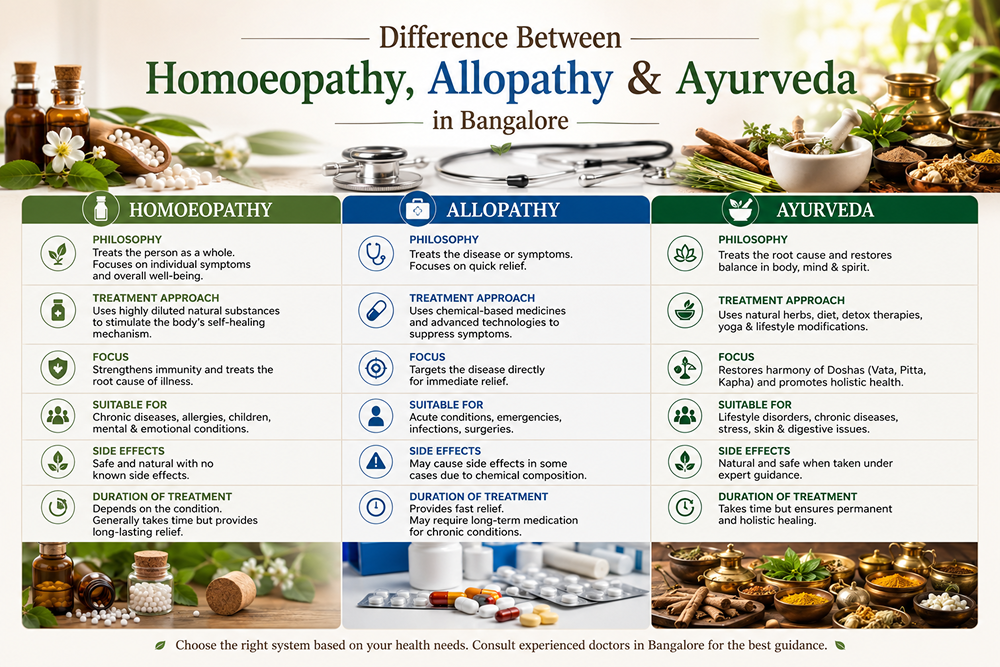
FeatureHomoeopathyAllopathyAyurveda
OriginGermanyModern scientific medicineAncient India
PhilosophyLike cures likeEvidence-based diagnosis and treatmentBalance of Vata, Pitta, and Kapha
DiagnosisIndividual symptom analysisClinical evaluation, tests, imagingBody constitution, pulse, lifestyle, digestion
TreatmentHighly diluted remediesMedicines, surgery, medical proceduresHerbal formulations, nutrition, lifestyle, Panchakarma
Primary FocusIndividualised symptom profileDisease diagnosis and managementPreventive healthcare and holistic wellness
Lifestyle GuidanceLimitedGeneral health adviceExtensive diet and lifestyle recommendations
Preventive CareModerateVaccination and screeningStrong emphasis on prevention and healthy living

Each healthcare system has its own strengths, and the most appropriate approach depends on the individual’s health condition and professional medical advice.

Difference Between Homoeopathy, Allopathy, and Ayurveda Treatment Methods

Understanding the treatment philosophy behind each system helps explain why their recommendations often differ.

Homoeopathy

Homoeopathy focuses on selecting remedies based on an individual’s complete symptom profile. Practitioners typically spend considerable time understanding physical, emotional, and mental symptoms before prescribing treatment.

The emphasis is on individualisation rather than treating everyone with the same diagnosis identically.

Allopathy

Allopathic medicine follows evidence-based clinical guidelines developed through extensive scientific research. Diagnosis usually involves physical examination, laboratory investigations, imaging, and established treatment protocols.

Treatment may include:

  • Prescription medications
  • Physiotherapy
  • Medical procedures
  • Surgery
  • Preventive healthcare
  • Vaccination
  • Rehabilitation

Ayurveda

Ayurveda begins by understanding the patient’s body constitution, digestion, lifestyle, sleep, diet, emotional well-being, and environmental influences.

Treatment plans may include:

  • Personalised herbal formulations
  • Dietary recommendations
  • Lifestyle modifications
  • Yoga and breathing exercises
  • Meditation
  • Panchakarma therapy Bangalore
  • Seasonal wellness practices

Ayurveda focuses on identifying and addressing underlying imbalances while promoting long-term health and preventive care.

Benefits of Homoeopathy, Allopathy, and Ayurveda

Each healthcare system offers unique benefits depending on the individual’s health needs.

Benefits of Homoeopathy

Homoeopathy is known for its personalised consultation process and individualised treatment philosophy. Practitioners consider the whole person rather than focusing only on isolated symptoms.

Benefits of Allopathy

Modern medicine provides rapid diagnosis through advanced technology and is highly effective in emergency care, surgery, trauma management, infectious diseases, and evidence-based treatment of many medical conditions.

Benefits of Ayurveda

Ayurveda offers a holistic approach that combines nutrition, healthy routines, herbal formulations, stress management, yoga, meditation, and preventive healthcare.

Its key strengths include:

  • Personalised healthcare
  • Long-term wellness focus
  • Lifestyle and nutritional guidance
  • Preventive healthcare
  • Holistic management of overall health
  • Individualised treatment plans

Which Is Best: Allopathy, Homoeopathy, or Ayurveda?

One of the most common questions patients ask is:

“Which is best: allopathy or homoeopathy or ayurveda?”

There is no universal answer because each healthcare system serves different purposes.

Allopathy is indispensable for emergency medicine, surgeries, trauma care, severe infections, and many evidence-based medical treatments.

Homoeopathy emphasises individualised consultations and symptom-based remedy selection according to its own therapeutic principles.

Ayurveda focuses on preventive healthcare, personalised nutrition, healthy lifestyle practices, and maintaining long-term balance within the body through holistic care.

The best choice depends on factors such as your health condition, treatment goals, medical history, and guidance from qualified healthcare professionals.

Many individuals seeking long-term wellness, healthy lifestyle guidance, and preventive care choose Ayurveda as part of their overall healthcare journey, while also using conventional medical care whenever appropriate.

Why Ayurveda Continues to Gain Popularity

As awareness of holistic healthcare grows, more people are exploring Natural medicine and traditional wellness systems that emphasise prevention and healthy living.

Ayurveda has gained increasing recognition because it encourages individuals to actively participate in maintaining their own health through:

  • Balanced nutrition
  • Healthy daily routines
  • Stress management
  • Regular physical activity
  • Seasonal wellness practices
  • Individualised healthcare plans

Rather than treating every patient identically, Ayurveda recognises that every person’s constitution and lifestyle are unique.

This personalised philosophy makes Ayurveda an attractive option for individuals looking to support their long-term health and overall well-being.

Ayurveda vs Homoeopathy for Immunity

One of the most searched comparisons is Ayurveda vs Homoeopathy for immunity. Both systems aim to promote overall health, but they approach immunity from different perspectives.

In Ayurveda, immunity is associated with the concept of Ojas, which represents the body’s vitality, resilience, and natural strength. Rather than focusing on a single remedy, Ayurveda encourages a comprehensive lifestyle that includes balanced nutrition, proper digestion, healthy sleep, stress management, regular exercise, and seasonal routines. Depending on an individual’s constitution, an Ayurvedic practitioner may also recommend personalised herbal formulations and wellness therapies.

Homoeopathy approaches health through remedies selected according to an individual’s overall symptom profile and constitutional assessment. Treatment is highly individualised, with practitioners considering physical, emotional, and mental characteristics before recommending remedies.

Both systems emphasise personalised care, but Ayurveda places a strong focus on lifestyle, nutrition, and preventive health practices to support long-term wellness.

Ayurveda vs Allopathy for Long-Term Wellness

Another common question is how Ayurveda vs Allopathy for long-term wellness compares.

Allopathy plays a vital role in diagnosing, managing, and treating diseases using evidence-based medicine. It is essential for emergencies, infections, surgery, trauma care, and many chronic medical conditions.

Ayurveda complements long-term wellness by encouraging healthy daily routines, balanced nutrition, stress management, regular physical activity, and personalised healthcare plans. Rather than focusing solely on disease management, Ayurveda promotes habits that help maintain overall balance and well-being.

Many people choose Ayurveda as part of a healthy lifestyle while continuing to follow conventional medical advice whenever necessary.

Preventive healthcare is one of Ayurveda’s greatest strengths, encouraging individuals to maintain wellness before illness develops.

Homoeopathy vs Ayurveda for Skin Disorders

When comparing Homoeopathy vs Ayurveda for skin disorders, it is important to understand that both systems follow different philosophies.

Homoeopathy selects remedies according to an individual’s symptom profile and constitutional characteristics.

Ayurveda evaluates factors such as body constitution (Prakriti), digestion (Agni), dietary habits, lifestyle, and overall balance before developing a personalised wellness plan. Healthy nutrition, daily routines, and herbal formulations are often included as part of Ayurvedic care.

Because skin concerns can have many underlying causes, consulting qualified healthcare professionals is essential to determine the most appropriate treatment approach.

Persistent or severe skin conditions should always be properly evaluated by a qualified medical professional.

Why Choose an Ayurveda & Siddha Hospital in Bangalore?

Bangalore has become a leading destination for holistic healthcare, with many people seeking personalised treatment that combines traditional knowledge with professional clinical care.

Choosing an Ayurveda & Siddha hospital in Bangalore offers several advantages:

  • Qualified Ayurvedic practitioners
  • Personalised consultations
  • Individualised treatment plans
  • Traditional therapies performed under professional supervision
  • Nutritional and lifestyle guidance
  • Holistic approach to overall well-being

If you are searching for the Best Ayurveda hospital in Bangalore or an Ayurvedic treatment near me, selecting an experienced healthcare provider ensures that your treatment plan is tailored to your individual health goals.

Panchakarma Therapy Bangalore

One of the most recognised Ayurvedic therapies is Panchakarma therapy Bangalore, a structured programme designed according to classical Ayurvedic principles.

Panchakarma consists of multiple stages that may include preparation, therapeutic procedures, and post-treatment care. Each programme is customised according to the individual’s body constitution, health status, and wellness objectives.

Potential wellness benefits include:

  • Supporting the body’s natural cleansing processes
  • Promoting digestive balance
  • Encouraging relaxation
  • Supporting healthy lifestyle changes
  • Enhancing overall vitality

Panchakarma therapy should always be performed under the supervision of qualified Ayurvedic practitioners following an individual assessment.

Why Choose Ayurhealing?

At Ayurhealing, we are committed to providing personalised healthcare based on authentic Ayurvedic principles. Every individual receives a comprehensive consultation that considers body constitution, lifestyle, nutrition, health history, and wellness goals before a treatment plan is recommended.

Patients choose Ayurhealing because we offer:

  • Experienced Best Ayurvedic doctor in Bangalore
  • Personalised Ayurvedic consultations
  • Traditional therapies delivered by trained professionals
  • Holistic wellness programmes
  • Preventive healthcare guidance
  • Individualised nutrition and lifestyle counselling
  • Patient-centred approach focused on long-term wellness

Whether you are searching for an Ayurvedic treatment near me or looking for a trusted Best Ayurveda hospital in Bangalore, our team is dedicated to helping you achieve better health through personalised Ayurvedic care.

Choosing the Right Healthcare System

There is no single healthcare system that is universally better for every individual or every health condition.

When deciding between Homoeopathy, Allopathy, and Ayurveda, consider:

  • Your current health condition
  • Medical history
  • Treatment goals
  • Severity of symptoms
  • Professional medical advice
  • Personal preferences

Many individuals use different healthcare systems at different times depending on their specific needs. Always consult qualified healthcare professionals before making treatment decisions.

The most effective healthcare is personalised, evidence-informed, and appropriate for your individual circumstances.

Conclusion

Understanding the Difference Between Homoeopathy, Allopathy, and Ayurveda in Bangalore allows you to make informed healthcare decisions based on your unique health needs.

While Allopathy remains the cornerstone of emergency medicine and evidence-based disease management, Homoeopathy focuses on individualised remedy selection according to its therapeutic principles. Ayurveda emphasises preventive healthcare, personalised nutrition, healthy lifestyle practices, and long-term wellness through holistic care.

If you are looking for an experienced Best Ayurvedic doctor in Bangalore, a trusted Ayurveda & Siddha hospital Bangalore, or an Ayurvedic treatment near me, Ayurhealing offers personalised consultations and holistic treatment plans designed to support your overall well-being.

Choosing the right healthcare system begins with understanding your health goals and consulting experienced professionals who can guide you toward the most appropriate approach.

FAQs

Homoeopathy is a system of medicine based on the principle of "like cures like." It uses highly diluted remedies selected according to an individual's complete symptom profile and overall constitution.

Allopathy, or modern medicine, is an evidence-based healthcare system that uses scientific diagnosis, medications, medical procedures, and surgery to prevent, diagnose, and treat diseases.

Ayurveda is an ancient Indian system of holistic healthcare that focuses on balancing Vata, Pitta, and Kapha through personalised nutrition, healthy lifestyle practices, herbal formulations, yoga, meditation, and therapies such as Panchakarma.

The primary difference lies in their philosophy and treatment approach. Homoeopathy uses individualised remedies, Allopathy relies on evidence-based medicine and clinical treatment, while Ayurveda focuses on restoring balance through lifestyle, nutrition, herbal formulations, and preventive healthcare.

Neither system is universally better. The most suitable approach depends on your health condition, treatment goals, and guidance from qualified healthcare professionals. Ayurveda is widely chosen for preventive healthcare and long-term wellness, while Homoeopathy follows its own individualised treatment principles.

Ayurvedic Treatment for Herpes in Bangalore: Natural Care for Healthy Skin and Wellness

Introduction

Living with herpes can be physically uncomfortable and emotionally challenging. Many people experience recurrent outbreaks, skin irritation, and uncertainty about how to manage the condition effectively. This is why many individuals are now exploring Ayurvedic treatment for herpes in Bangalore as a natural and holistic approach to improving skin health and overall well-being. Unlike treatments that focus only on symptom management, Ayurveda aims to restore balance within the body by strengthening immunity, improving digestion, and supporting healthy skin. At Ayurhealing, a trusted Ayurveda & Siddha Hospital Bangalore, personalized Ayurvedic therapies are designed to promote long-term wellness while addressing the root causes that may contribute to recurring skin concerns.

Understanding Herpes

Herpes is a viral infection caused by the herpes simplex virus (HSV). It commonly appears as small blisters or sores on the skin or mucous membranes. While modern medicine offers antiviral medications to manage outbreaks, Ayurveda approaches the condition by supporting the body’s natural healing mechanisms and improving overall health.

Herpes outbreaks may occur due to several factors, including stress, reduced immunity, poor lifestyle habits, hormonal changes, or inadequate nutrition. Since every individual experiences the condition differently, a personalized treatment plan is important.

Ayurveda focuses on improving the body’s internal balance rather than simply addressing external symptoms.

How Ayurveda Understands Herpes

According to Ayurveda, skin health reflects the internal balance of the body. Disturbances in the doshas-particularly Pitta and Vata-along with weakened digestive fire (Agni) and toxin accumulation (Ama), may contribute to various skin disorders.

Instead of concentrating only on visible lesions, Ayurvedic treatment seeks to improve:

  • Digestive health
  • Immune strength
  • Blood purification
  • Skin nourishment
  • Lifestyle balance

This holistic philosophy makes Ayurveda a preferred option for many individuals looking for long-term wellness.

Why Choose Ayurvedic Treatment for Herpes in Bangalore?

Bangalore’s busy lifestyle often brings increased stress, irregular eating habits, lack of sleep, and reduced physical activity, all of which can influence immunity and skin health.

Choosing Ayurvedic treatment for herpes in Bangalore provides a comprehensive approach that considers your entire health profile rather than treating only the visible symptoms.

Potential benefits include:

  • Supporting healthy immune function
  • Improving skin wellness
  • Promoting better digestion
  • Encouraging healthy daily routines
  • Enhancing overall quality of life

Ayurveda believes that when the body regains balance, its natural healing capacity improves.

The Importance of Strong Immunity

One of the central principles of Immune wellness Ayurveda is strengthening the body’s natural defense system.

Ayurveda describes immunity through the concept of Ojas, which represents vitality, resilience, and overall strength.

When immunity is supported through healthy nutrition, balanced lifestyle habits, proper sleep, and appropriate Ayurvedic care, the body may become better equipped to maintain overall wellness.

Rather than viewing immunity as a separate function, Ayurveda considers it an essential part of complete health.

Ayurvedic Treatment for Viral Skin Infections Bangalore

Many people searching for Ayurvedic treatment for viral skin infections Bangalore are looking for healthcare that addresses the whole person rather than focusing solely on the infection.

At Ayurhealing, individualized treatment plans may include:

Herbal Support

Traditional Ayurvedic herbs are selected according to the individual’s body constitution and health condition.

Dietary Guidance

Healthy digestion is considered essential for maintaining healthy skin and supporting immunity.

Lifestyle Recommendations

Daily routines, stress management, and sleep quality are important components of Ayurvedic care.

Wellness Therapies

Appropriate therapies are recommended only after a detailed consultation with an experienced Ayurvedic physician.

This personalized approach helps support both skin health and overall well-being.

Holistic Skin Care Through Ayurveda

Healthy skin begins from within. Holistic skin care in Ayurveda focuses on improving internal health rather than relying only on topical applications.

Key areas include:

  • Balanced digestion
  • Proper hydration
  • Nutritious food
  • Healthy sleep
  • Stress reduction
  • Regular physical activity

When these areas improve, skin health often benefits as well.

True skin wellness reflects the overall health of the body.

Ayurvedic Remedies for Skin Health

Traditional Ayurveda includes a wide range of herbal preparations that have been used for centuries to support healthy skin.

Ayurvedic remedies for skin health are selected according to individual health needs and may include herbal formulations that support:

  • Healthy digestion
  • Blood purification
  • Skin nourishment
  • Immune balance
  • Overall vitality

Because every individual is unique, herbal medicines should always be taken under professional supervision.

Traditional Ayurvedic Medicine and Personalized Care

One of the greatest strengths of Traditional Ayurvedic medicine is its individualized approach.

Rather than providing the same treatment for everyone, Ayurvedic practitioners carefully evaluate:

  • Body constitution (Prakriti)
  • Dosha imbalance
  • Digestive health
  • Lifestyle habits
  • Stress levels
  • Sleep quality
  • Existing health conditions

Based on this evaluation, a customized treatment plan is developed to support long-term wellness.

Kerala Ayurvedic Treatment in Bangalore

Many people specifically seek Kerala Ayurvedic treatment in Bangalore because Kerala has a long-standing reputation for preserving authentic Ayurvedic traditions.

Kerala-style Ayurvedic care often includes:

  • Classical herbal formulations
  • Personalized therapies
  • Detoxification procedures
  • Rejuvenation programs
  • Lifestyle counselling

These traditional methods complement modern healthcare by focusing on prevention, balance, and overall health.

Herpes Ayurvedic Treatment Near Me

When searching online for Herpes Ayurvedic treatment near me, it is important to choose an experienced Ayurvedic healthcare provider rather than simply selecting the nearest clinic.

Look for:

  • Qualified Ayurvedic doctors
  • Authentic Ayurvedic therapies
  • Personalized treatment plans
  • Patient education
  • Long-term wellness support

Choosing the right healthcare team can significantly improve your overall treatment experience.

Herpes Treatment Bangalore: A Holistic Ayurvedic Approach

Individuals looking for Herpes Treatment Bangalore often seek long-term solutions that support both skin health and overall wellness. Ayurveda approaches herpes by understanding the person’s unique body constitution, lifestyle, digestive health, and immune status before recommending treatment.

At Ayurhealing, treatment plans are personalized rather than standardized. The focus is on improving internal balance, supporting healthy skin, and encouraging sustainable lifestyle changes that contribute to long-term well-being.

Unlike approaches that concentrate only on visible symptoms, Ayurveda works to strengthen the body’s natural healing capacity while promoting overall health.

Panchakarma and Ayurvedic Wellness Therapies

One of the unique aspects of Ayurveda is its emphasis on cleansing and rejuvenation therapies. Depending on the individual’s condition, Panchakarma may be recommended as part of a comprehensive wellness program.

Panchakarma therapies aim to support the body’s natural detoxification process and restore dosha balance.

Some commonly recommended therapies include:

Virechana

Virechana is a classical purification therapy primarily used to help balance excess Pitta dosha. It is performed only after proper preparation and under the supervision of a qualified Ayurvedic physician.

Abhyanga

Abhyanga involves the application of warm herbal oils using specific massage techniques. In Ayurveda, it is traditionally used to support circulation, nourish tissues, and promote relaxation.

Swedana

Swedana is a therapeutic sweating procedure that helps the body eliminate toxins while reducing stiffness and promoting comfort.

These therapies are always selected according to the individual’s health condition and should never be performed without professional supervision.

Panchakarma is not a general detox program-it is a carefully planned therapeutic process tailored to each individual.

Healthy Lifestyle Habits That Support Skin Wellness

Ayurveda teaches that lasting health begins with consistent daily habits. Along with personalized treatment, maintaining a healthy lifestyle can support skin wellness and overall vitality.

Helpful practices include:

  • Eating freshly prepared, nutritious meals
  • Drinking adequate water throughout the day
  • Getting sufficient sleep
  • Practising yoga or gentle physical activity
  • Managing stress through meditation and breathing exercises
  • Following the dietary recommendations provided by your Ayurvedic doctor

These simple habits help create an environment that supports the body’s natural healing processes.

Why Choosing the Best Ayurvedic Doctor in Bangalore for Herpes Treatment Matters

Selecting the Best Ayurvedic doctor in Bangalore for herpes treatment is an important step toward receiving safe and individualized care.

An experienced Ayurvedic physician will carefully evaluate multiple aspects of your health before recommending any treatment.

This assessment generally includes:

Body Constitution (Prakriti)

Every individual has a unique constitution that influences treatment planning.

Digestive Health

Ayurveda considers healthy digestion essential for maintaining strong immunity and healthy skin.

Lifestyle Assessment

Daily habits, stress levels, physical activity, and sleep quality all influence overall health.

Individual Wellness Goals

Treatment recommendations are customized according to the patient’s specific health concerns and long-term objectives.

Personalized care remains one of Ayurveda’s greatest strengths because no two individuals require the same treatment plan.

Best Ayurvedic Clinic in Koramangala for Herpes Care

Finding the Best Ayurvedic clinic in Koramangala for herpes care involves more than choosing a nearby healthcare provider. It is important to select a clinic that follows authentic Ayurvedic principles and emphasizes patient-centered care.

A quality Ayurvedic clinic should provide:

Comprehensive Consultation

A detailed health assessment before beginning treatment.

Personalized Care

Treatment plans that reflect the individual’s unique constitution and health condition.

Authentic Ayurvedic Therapies

Traditional therapies performed according to established Ayurvedic guidelines.

Long-Term Wellness Support

Ongoing guidance regarding diet, lifestyle, and preventive healthcare.

At Ayurhealing, every patient receives individualized attention with treatment plans designed to support long-term wellness rather than temporary symptom management.

Why Choose Ayurhealing?

Ayurhealing is committed to providing authentic Ayurvedic healthcare through personalized treatment plans based on classical Ayurvedic principles.

Patients choose Ayurhealing because of its holistic approach and focus on sustainable wellness.

Experienced Ayurvedic Physicians

Our doctors carefully assess each patient’s health before recommending treatment.

Personalized Treatment Plans

Every individual receives customized care based on their body constitution and overall health.

Authentic Ayurveda

Our therapies follow traditional Ayurvedic methods while addressing modern lifestyle-related health concerns.

Holistic Healthcare

We focus on nutrition, lifestyle, digestive health, stress management, and preventive wellness alongside treatment.

Patient Education

We believe informed patients make healthier decisions, which is why education is an essential part of every consultation.

Whether you are searching for Ayurvedic treatment for herpes in Bangalore, Herpes Ayurvedic treatment near me, or an experienced Ayurveda & Siddha Hospital Bangalore, Ayurhealing provides compassionate, individualized care to support your wellness journey.

Conclusion

Choosing Ayurvedic treatment for herpes in Bangalore offers a holistic approach that goes beyond managing visible symptoms. Ayurveda focuses on strengthening immunity, improving digestion, supporting healthy skin, and restoring balance throughout the body. By combining personalized herbal therapies, healthy lifestyle practices, and traditional Ayurvedic wisdom, individuals can work toward improved overall wellness and long-term skin health.

If you are searching for Herpes treatment in Bangalore, Ayurvedic treatment for viral skin infections in Bangalore, or the Best Ayurvedic clinic in Koramangala for herpes care, Ayurhealing is dedicated to providing authentic Ayurvedic care that supports your individual health goals. Our experienced team believes that true healing comes from addressing the root cause while helping patients build healthier and more balanced lives.

FAQs

Ayurveda focuses on supporting overall wellness, strengthening immunity, promoting healthy skin, and improving internal balance through personalized treatment plans.

Treatment may include individualized herbal formulations, dietary recommendations, lifestyle guidance, and selected Ayurvedic therapies based on the patient's health condition.

Not always. Panchakarma is recommended only after a detailed consultation with an experienced Ayurvedic doctor, depending on the individual's health status and treatment requirements.

Healthy eating, proper sleep, stress management, hydration, and regular physical activity all contribute to overall wellness and healthy skin.

Ayurhealing offers personalized Ayurvedic care, experienced physicians, authentic therapies, and a holistic approach focused on long-term health and wellness.

Ayurvedic Diet Plan for a Healthy Life – Eat Right the Ayurvedic Way

Have you ever noticed that you and a close friend can eat the same meal, yet one of you feels energised while the other feels heavy and bloated? According to Ayurveda, this is not a coincidence – it is your body speaking its constitution. An Ayurvedic diet plan for a healthy life is not a universal prescription. It is a deeply personalised approach to eating that honours your unique body type, your digestive capacity, and the rhythms of nature. In Ayurveda, food is not just fuel – it is your most powerful medicine. And when you eat the right food, in the right way, at the right time, everything changes.

In a city like Bangalore, where the pace of life is relentless, and the temptation of quick, processed meals is everywhere, many people find their health quietly deteriorating despite their best intentions. Irregular meal timings, stress eating, cold and packaged foods, and incompatible food combinations are silently disrupting digestion, energy, and long-term wellness for countless residents. The Ayurvedic way of eating offers a beautifully practical and deeply time-tested antidote.

At Ayurhealing, our Ayurvedic physicians guide patients toward personalised dietary plans that align with their constitution, health goals, and current imbalances. This blog is a window into that wisdom – the foundational principles that make an Ayurvedic diet plan not just a meal schedule, but a genuine lifestyle transformation.

What Is an Ayurvedic Diet Plan and How Is It Different?

Most modern diets focus on calories, macros, or food groups. An Ayurvedic diet plan is fundamentally different. It is built around three core pillars:

  • Your constitution (Prakriti): Every person is born with a unique combination of Vata, Pitta, and Kapha – the three biological energies that govern all physical and mental functions. Your dominant dosha determines which foods nourish you and which create imbalance.
  • The quality of food (Guna): Ayurveda classifies food into three qualities: Sattvic (pure, light, and nourishing), Rajasic (stimulating and activating), and Tamasic (heavy, dull, and depleting). A healthy Ayurvedic diet emphasises Sattvic food as the foundation.
  • Your digestive fire (Agni): Strong Agni means efficient digestion, good immunity, and clear energy. Weak or irregular Agni leads to the accumulation of Ama (undigested toxins) – the root of most chronic disease in Ayurvedic understanding.

The result is an eating philosophy that is simultaneously ancient and strikingly modern in its logic: eat what works for your body, not what works for someone else’s body.

What to Eat According to Your Dosha – The Vata Pitta Kapha Diet Guide

Understanding your dominant dosha is the gateway to a truly personalised Ayurvedic diet. Here is a practical overview of the dosha-based diet plan for each type:

Vata Diet – Warm, Moist & Grounding

Vata types are naturally lean, creative, and quick-moving – but tend toward anxiety, dryness, irregular digestion, and constipation when out of balance. The Vata diet focuses on warming, oily, and grounding foods:

  • Warm, freshly cooked meals – rice, oats, soups, and stews
  • Sweet, sour, and salty tastes – naturally pacify Vata
  • Healthy oils – ghee, sesame oil, and coconut oil in generous quantities
  • Sweet root vegetables – sweet potato, carrot, beets
  • Warm spiced milk and herbal teas – ginger, cardamom, cinnamon
  • Avoid: raw salads, cold drinks, dry crackers, and excessive fasting

Pitta Diet – Cooling, Light & Non-Spicy

Pitta types are sharp, driven, and warm-natured – but prone to acidity, inflammation, skin rashes, and irritability when aggravated. The Pitta diet emphasises cooling and anti-inflammatory foods:

  • Sweet, bitter, and astringent tastes – naturally pacify Pitta
  • Cooling vegetables – cucumber, ash gourd, leafy greens, and zucchini
  • Sweet fruits – pomegranate, sweet lime, ripe mango, and coconut
  • Cow’s milk, ghee, and fresh yoghurt – in moderation
  • Cooling grains – rice, barley, and wheat
  • Avoid: spicy, sour, salty, and fermented foods; alcohol; excess garlic and onion

Kapha Diet – Light, Warm & Stimulating

Kapha types are calm, grounded, and nurturing – but tend toward weight gain, slow digestion, congestion, and lethargy when imbalanced. The Kapha diet is light, dry, and stimulating:

  • Pungent, bitter, and astringent tastes – naturally reduce Kapha
  • Light grains – millet, barley, buckwheat, and corn
  • All legumes – particularly moong dal and red lentils
  • Pungent spices – ginger, black pepper, turmeric, and mustard seeds in every meal
  • Light vegetables – bitter gourd, drumstick, spinach, and sprouts
  • Avoid: dairy, fried foods, refined sugar, cold drinks, heavy desserts, and oversleeping after meals

Golden Ayurvedic Food Rules Everyone Should Follow

Regardless of your dosha, Ayurveda prescribes a set of universal food principles that support optimal digestion, immunity, and energy for everyone. These are the non-negotiables of an Ayurvedic diet plan for healthy living:

  1. Eat warm, freshly cooked food: Cold, leftover, and refrigerated food weakens Agni and generates Ama. Freshly prepared, warm meals are always preferred in Ayurveda.
  2. Eat your largest meal at noon: Digestive fire is at its peak between 10 AM and 2 PM, aligned with the sun’s peak. A light breakfast, a substantial lunch, and a light early dinner mirror the body’s natural digestive rhythm perfectly.
  3. Never eat until your previous meal is fully digested: Eating before full digestion creates a toxic overlap of partially digested food – a leading cause of Ama accumulation. Leave at least 4 to 5 hours between meals.
  4. Avoid incompatible food combinations (Viruddha Ahara): Certain food combinations actively disturb digestion in Ayurveda: milk with fish, fruit with dairy, honey with hot liquids, and raw and cooked food mixed are among the most common culprits.
  5. Eat in a calm, mindful state: Ayurveda insists that HOW you eat is as important as WHAT you eat. Eating while distracted, stressed, or emotionally disturbed significantly impairs digestion, regardless of how nutritious the food is.
  6. Include all six tastes in every meal: Sweet, sour, salty, pungent, bitter, and astringent – each taste feeds a different tissue and ensures nutritional completeness and satisfaction after every meal.

Ayurvedic Diet for Specific Health Goals

Ayurvedic Diet for Weight Loss

The Ayurvedic diet for weight loss is not about starving the body – it is about correcting the Kapha imbalance and sluggish Agni that drive unhealthy fat accumulation. The focus is on light, warm, easily digestible meals with generous use of metabolism-stimulating spices like ginger, black pepper, turmeric, and long pepper. Intermittent eating windows that align with natural digestive rhythms, avoiding daytime sleeping, and regular physical activity before breakfast are all central to the Ayurvedic weight management approach.

Ayurvedic Diet for Digestion

For those dealing with bloating, acidity, constipation, or irregular bowels, the Ayurvedic diet for digestion begins with strengthening Agni. Starting the day with warm water and ginger, eating moong dal khichdi as the primary meal, using digestive spices like cumin, coriander, and fennel in cooking, and drinking warm water rather than cold throughout the day are among the most impactful first steps. Avoiding raw salads, cold beverages, and leftover food goes a long way toward restoring digestive comfort.

Ayurvedic Diet for Diabetes

The Ayurvedic diet for diabetes focuses on correcting Kapha and Pitta imbalances that drive insulin resistance and pancreatic dysfunction. Bitter gourd (karela), fenugreek seeds, barley, and turmeric are among the most effective dietary allies for blood sugar regulation. Low glycaemic index grains like millets and barley replace refined rice and white flour. Regular meal timings, avoidance of sweet and oily foods, and the inclusion of bitter and astringent tastes at every meal are non-negotiable elements of diabetes management in Ayurveda.

Ayurvedic Diet Tips for the Bangalore Lifestyle

Bangalore’s unique lifestyle – long work hours, frequent eating out, air-conditioned offices, and high professional stress – creates specific dietary challenges. Here are practical Ayurvedic diet tips for Bangalore’s busy lifestyle that are realistic and immediately actionable:

  • Start every day with a glass of warm water before tea or coffee – it rehydrates the body and stimulates Agni gently after the overnight fast
  • Keep a small pack of roasted cumin or fennel seeds in your desk drawer – chew a pinch after every meal to prevent post-lunch bloating and the dreaded afternoon energy slump
  • When eating out, choose warm, freshly prepared South Indian options like sambar, rasam, and idlis over cold sandwiches and salads – they are more Agni-friendly than most people realise
  • Limit air-conditioned exposure during meals when possible – cold environments suppress digestive fire and impair nutrient absorption
  • Swap your afternoon packaged snack for a small cup of warm buttermilk with cumin and rock salt – it is one of Ayurveda’s most underrated digestive tonics
  • Plan your dinner before 7:30 PM whenever possible – late-night eating is one of the most disruptive habits for Agni in a city where late work hours are routine

Get a Personalised Ayurvedic Diet Plan at Ayurhealing, Bangalore

Reading about Ayurvedic nutrition is a wonderful starting point – but the real transformation happens when you have a personalised plan designed specifically for your constitution, your current health condition, and your daily life. At Ayurhealing, one of the most trusted Ayurvedic nutrition clinics in Bangalore, our experienced Ayurvedic physicians assess your Prakriti through Nadi Pariksha (pulse diagnosis) and design a complete dietary plan that addresses your specific health goals – whether that is weight management, digestive restoration, blood sugar control, or overall vitality.

We also integrate dietary guidance with herbal prescriptions and Panchakarma therapies when needed – creating a holistic, whole-person approach that produces results no generic diet plan ever can. Our dietary consultations are available both in-clinic and online for patients across Bangalore.

Final Thoughts: Food Is Your First Medicine

The ancient Ayurvedic sages had a saying: “When diet is wrong, medicine is of no use. When the diet is correct, medicine is of no need.” This is not just poetic wisdom – it is a clinical reality that thousands of years of Ayurvedic practice have consistently validated.

An Ayurvedic diet plan for a healthy life is not a restrictive regime or a short-term fix. It is a way of understanding your body, honouring its needs, and nourishing it with the intelligence that nature built into both food and human physiology. Start with small, consistent changes – and you will be astonished by how quickly your body responds when you begin to eat in alignment with who you truly are.

Ready to eat right the Ayurvedic way? Book a dietary consultation with the expert team at Ayurhealing in Bangalore today – and let us design a diet plan that works for your body, your goals, and your life.

FAQs

Your dosha type is best identified through a professional Ayurvedic consultation and pulse diagnosis (Nadi Pariksha). Ayurvedic doctors assess your body type, digestion, lifestyle, and health patterns to create a personalised diet plan.

Yes, an Ayurvedic diet supports sustainable weight loss by improving digestion, balancing doshas, and boosting metabolism naturally. It focuses on healthy eating habits instead of extreme calorie restriction.

Yes, Ayurvedic diets can support blood sugar management through low-glycaemic foods, balanced meal timings, and natural herbs. A personalised plan under Ayurvedic guidance can help improve overall health and energy levels.

Absolutely. Ayurveda mainly recommends fresh, balanced foods, but non-vegetarian meals can also be included based on your body constitution, health condition, and dietary needs.

You can visit Ayurhealing in Bangalore for a personalised Ayurvedic diet consultation. Experienced Ayurvedic doctors provide customised diet plans for weight management, digestion, diabetes, wellness, and lifestyle balance.

What Is Basti in Ayurveda? Benefits, Types & Who Needs It

In the vast and beautifully structured world of Ayurvedic healing, there exists a therapy so comprehensive, so deeply restorative, that ancient texts called it the very best of all Panchakarma procedures. That therapy is Basti treatment in Ayurveda. For thousands of years, Ayurvedic physicians have relied on Basti – a precisely administered medicated enema therapy – to cleanse the colon, correct Vata imbalances, eliminate deep-seated toxins, and restore the body’s natural rhythms. And yet, despite its extraordinary therapeutic range, Basti remains one of the least understood Panchakarma therapies outside Ayurvedic circles.

If the word “enema” makes you hesitant, you are not alone. Most people’s reference point for enemas is the uncomfortable, clinical procedure used in hospitals – nothing like what Basti represents. Ayurvedic Basti is a deeply nourishing, carefully personalised, medically supervised therapy that uses warm herbal oils, decoctions, and ghee to heal far beyond the colon – reaching joints, nerves, muscles, hormonal systems, and even the mind.

At Ayurhealing, we have seen Basti transform patients who had exhausted every other option – from chronic back pain and arthritis to stubborn constipation and hormonal imbalances. This blog is our attempt to give you the full, honest picture of what Basti is, how it works, who truly benefits from it, and why it continues to stand as the gold standard of Ayurvedic detoxification.

What Is Basti Treatment in Ayurveda? Understanding the Basics

The word “Basti” in Sanskrit literally means “bladder” – referring to the traditional animal bladder instrument once used to administer the therapy. Today, sterile medical-grade equipment is used, but the classical protocols remain unchanged. Basti Panchakarma therapy involves administering medicated substances – herbal decoctions (Kashaya), medicated oils (Sneha), ghee, milk, or a combination of these – through the rectal route to cleanse, nourish, and rebalance the lower gastrointestinal tract and the entire Vata dosha system.

In Ayurveda, the colon (Pakwashaya) is considered the primary seat of Vata dosha – the energy governing all movement, nerve conduction, circulation, elimination, and even thought. When Vata becomes aggravated or imbalanced, it causes a cascade of health problems throughout the body: pain, stiffness, anxiety, constipation, dryness, irregular digestion, and poor sleep, to name just a few.

Basti works directly at the root of this imbalance. By administering therapeutic substances through the colon, Basti simultaneously detoxifies, lubricates, nourishes, and rebalances – making it one of the most multidimensional healing interventions in all of Ayurvedic medicine.

Key reasons Basti is considered the most important of the five Panchakarma therapies:

  • It directly addresses Vata dosha – the dosha most responsible for chronic disease and premature ageing
  • The rectal mucosa absorbs herbal compounds rapidly and efficiently, allowing healing substances to reach deep tissues
  • It acts on the enteric nervous system – the gut’s own “second brain” – producing systemic neurological and hormonal effects
  • It can be customised comprehensively for dozens of different conditions through variations in herbal formulations
  • Its effects are lasting – not just symptomatic relief, but genuine constitutional rebalancing

Types of Basti in Ayurveda – Not All Basti Is the Same

One of the most important things to understand about Basti is that it is not a single, uniform procedure. Classical Ayurvedic texts describe multiple types of Basti, each designed for a specific therapeutic purpose. Your Ayurvedic physician will select the appropriate type – or a combination – based on your constitution, current condition, and treatment goals.

1. Niruha Basti (Asthapana Basti) – The Cleansing Enema

Niruha Basti uses a water-based herbal decoction combined with honey, rock salt, medicated oils, and herbal pastes. It is primarily a cleansing and detoxifying Basti – designed to remove accumulated Ama (toxins), expelled Vata, and metabolic waste from the colon and deeper tissues. It is particularly effective for conditions characterised by accumulation, heaviness, and systemic toxin overload. Niruha Basti is typically retained in the body for a short period before being expelled, carrying toxins with it.

2. Anuvasana Basti- The Nourishing Enema

Anuvasana Basti uses warm medicated oils or ghee administered in smaller quantities. Unlike Niruha, this type nourishes, lubricates, and rejuvenates the colon and deeper tissues, and is safely retained for longer periods to allow deep tissue absorption. It is especially valuable for Vata-type conditions involving dryness, depletion, weakness, and emaciation. Anuvasana Basti is generally gentler and suitable for regular use over a treatment course.

3. Kati Basti – Localised Oil Retention for the Lower Back

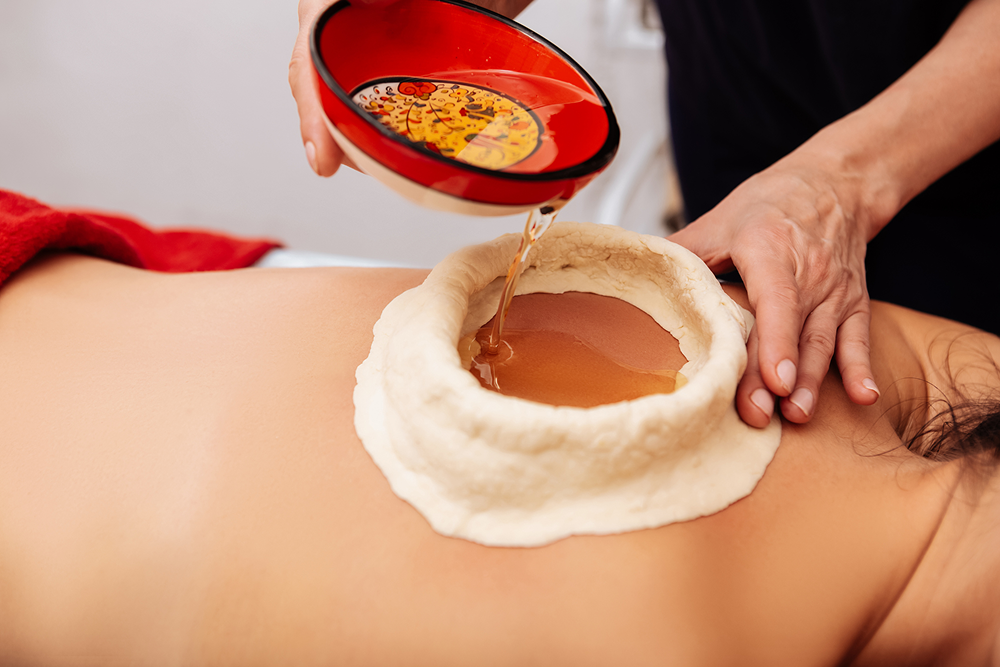
Kati Basti treatment is a specialised external therapy where warm medicated oil is retained over the lower back (lumbar region) using a ring made of herbal dough. Though it shares the “Basti” name, this is a topical procedure rather than an internal enema. It is one of the most effective Ayurvedic treatments for chronic low back pain, lumbar disc herniation, sciatica, and sacral stiffness. The sustained heat and deep penetration of medicated oil into the paraspinal muscles and lumbar vertebrae bring remarkable, lasting relief that most patients describe as transformative.

4. Uttara Basti – Reproductive and Urinary Health

Uttara Basti is administered through the urinary or reproductive tract and is used specifically for conditions affecting the urogenital system – including infertility, PCOS, uterine disorders, urinary tract infections, and semen quality issues in men. This highly specialised form must be performed by a trained Ayurvedic physician and is an integral part of fertility-focused Ayurvedic treatment programmes.

5. Matra Basti – The Daily Maintenance Basti

Matra Basti uses a small, fixed quantity of medicated oil and can be administered daily as a maintenance and rejuvenation therapy. It is safe for regular use, does not require prior oleation or special preparation, and is suitable for those who need ongoing Vata pacification – such as the elderly, those with chronic degenerative conditions, or highly active individuals whose Vata is perpetually elevated by lifestyle.

The choice of which type to use – and in what sequence – is one of the most nuanced clinical decisions in Ayurvedic practice. This is precisely why self-administering Basti is strongly discouraged. The personalisation, preparation, and post-procedure management are what make Basti safe and effective.

The Key Benefits of Basti Treatment in Ayurveda

The therapeutic scope of Panchakarma Basti therapy is broader than almost any other single Ayurvedic intervention. Here is a detailed look at the most significant and well-documented benefits:

Basti Treatment for Back Pain and Musculoskeletal Disorders

One of the most powerful applications of Basti is in the treatment of musculoskeletal conditions. Basti treatment for back pain – particularly in combination with Kati Basti – addresses not just the pain itself but the underlying Vata aggravation and tissue depletion driving the chronic discomfort. Conditions that respond exceptionally well include:

  • Chronic low back pain and lumbar disc herniation
  • Sciatica and radiating leg pain
  • Cervical spondylosis and neck stiffness
  • Osteoarthritis and degenerative joint disease
  • Basti Ayurveda for arthritis – both rheumatoid and osteoarthritis types
  • Muscle stiffness, cramps, and spasms
  • Fibromyalgia and chronic widespread pain

Patients who have lived with chronic back pain for years – often through cycles of painkillers, physiotherapy, and temporary relief – frequently report that a course of Basti therapy produces the most significant and lasting improvement they have ever experienced.

Basti Treatment for Constipation and Digestive Disorders

The colon is Basti’s primary domain, making it the most direct and effective Ayurvedic intervention for digestive concerns. Basti treatment for constipation goes far beyond simply clearing the bowels – it retrains the colon, restores healthy peristalsis, replenishes the intestinal mucosa, and corrects the Vata imbalance that makes chronic constipation so resistant to ordinary remedies. Digestive conditions that benefit significantly include:

  • Chronic constipation – including cases where laxatives have become dependency-forming
  • Irritable Bowel Syndrome (IBS) with constipation or alternating patterns
  • Bloating, gas, and abdominal distension
  • Inflammatory Bowel Disease (IBD) – Crohn’s disease and ulcerative colitis
  • Haemorrhoids (Arsha) and anal fissures
  • Malabsorption syndromes and nutritional deficiencies linked to poor gut function

Basti for Vata Dosha – Healing the Root of Most Chronic Disease

In Ayurveda, uncontrolled or aggravated Vata is the ultimate driver of most chronic diseases. Basti for Vata dosha correction is therefore not just a treatment for specific conditions – it is a fundamental act of prevention and constitutional rebalancing. When Vata is properly pacified through Basti, the ripple effects touch every system of the body:

  • The nervous system calms – anxiety, restlessness, and insomnia improve
  • Circulation improves – cold extremities, poor wound healing, and cardiovascular irregularities correct
  • The immune system strengthens – chronic infections and autoimmune flares reduce in frequency
  • Hormonal regulation improves, particularly thyroid, adrenal, and reproductive hormones
  • Cognitive clarity returns – brain fog, poor memory, and concentration difficulties ease
  • Skin quality improves – dryness, premature wrinkling, and hair fall reduce

This is what makes Basti so uniquely powerful – it does not just treat symptoms; it addresses the foundational energy imbalance from which most chronic conditions in the modern world arise.

Additional Conditions Treated by Basti Therapy

Beyond the major categories above, clinical Ayurvedic practice has documented Basti’s effectiveness across a wide range of conditions:

  • Neurological disorders – Parkinson’s disease, motor neuron conditions, and peripheral neuropathy
  • Infertility and reproductive health – both male and female
  • Obesity and metabolic disorders
  • Skin conditions – psoriasis, eczema, and chronic urticaria linked to Vata imbalance
  • Anti-ageing and rejuvenation – Basti is a primary Rasayana therapy in Ayurveda
  • Post-surgical recovery and rehabilitation – to rebuild depleted tissues
  • Diabetes management – improving insulin sensitivity and reducing neuropathic complications

What to Expect During a Basti Treatment Session

For patients new to Basti, understanding what the process involves helps ease any apprehension and prepares them to get the most from the therapy. Here is a step-by-step overview of what a typical Basti session at a quality Ayurvedic clinic looks like:

  • Pre-treatment preparation (Purvakarma): Before Basti can be administered, the body is typically prepared through a period of internal oleation (Snehapana – consuming medicated ghee) and external oil massage (Abhyanga), followed by steam therapy (Swedana). This softens and loosens deep-seated toxins, making them available for elimination through the Basti.
  • Preparation of the Basti formulation: Your physician prescribes the exact herbal formulation for your condition. The decoctions and oils are freshly prepared, warmed to body temperature, and carefully combined according to the classical ratios described in Ayurvedic texts.
  • Administration: You lie comfortably on your side on a treatment table. The medicated preparation is gently administered through the rectum using a sterile, graduated enema syringe. The process is quick – usually completed within a few minutes – and should cause no pain when performed by a trained therapist.
  • Retention and release: For Niruha Basti, you retain the preparation for a short period before releasing it. For Anuvasana Basti, retention is longer to allow deep tissue absorption. Your therapist will guide you through this phase.
  • Rest and post-treatment care: After the session, you rest in a warm, quiet environment. Warm herbal teas may be offered. You will be given specific dietary and lifestyle guidance for the remainder of the day – avoiding cold food, raw foods, and strenuous activity.

Who Should Consider Basti Treatment – and Who Should Avoid It?

Basti is appropriate for a wide range of individuals across age groups. You may be an ideal candidate if you:

  • Experience chronic joint pain, back pain, or stiffness that has not fully responded to other treatments
  • Struggle with long-term constipation, IBS, or sluggish digestion
  • Have been diagnosed with a Vata-predominant condition by an Ayurvedic physician
  • Are undergoing a full Panchakarma detox programme
  • Are you managing a neurological condition or recovering from a degenerative disease
  • Are you seeking natural support for fertility, hormonal balance, or reproductive health
  • Want to undergo a deep Ayurvedic detox treatment in Bangalore as preventive care

Basti is generally contraindicated for:

  • Pregnant women
  • Patients with active rectal bleeding or recent rectal surgery
  • Those with acute diarrhoea or dysentery
  • Patients with intestinal perforation or active inflammatory bowel flare
  • Children under seven years of age
  • Those who have recently undergone fasting without proper oleation preparation

A thorough pre-treatment consultation with a qualified Ayurvedic physician is always required before beginning any Basti programme. The assessment includes pulse diagnosis, constitution evaluation, and a review of your current medications and health history.

Basti and Panchakarma Treatment in Bangalore – What to Look For

Bangalore has emerged as one of India’s most active cities for authentic Ayurvedic care, with a growing number of patients seeking Panchakarma treatment in Bangalore as a serious medical intervention – not just a wellness experience. When looking for a clinic to receive Basti, the standard of medical supervision, the authenticity of herbal preparations, and the thoroughness of the pre- and post-treatment care are everything.

At Ayurhealing, we offer the best Ayurvedic treatment in Bangalore, drawing from the deep classical traditions of both mainstream Ayurveda and the refined healing legacy of Kerala. As a trusted Ayurveda and Siddha hospital, our approach integrates:

  • In-depth initial consultation with Nadi Pariksha (pulse diagnosis) by our senior physicians
  • Customised Basti formulations prepared in-house using quality-tested, authentic herbs
  • A fully supervised Panchakarma programme with daily progress review
  • Personalised dietary and lifestyle guidance throughout the treatment
  • Integration with other Panchakarma therapies – Abhyanga, Swedana, Virechana, and Nasyam – when clinically indicated
  • Detailed post-treatment follow-up to consolidate results and prevent recurrence

Whether you are searching for the best Ayurvedic doctor in Bangalore for a specific condition or are simply ready to invest in your long-term health through authentic Panchakarma, our team at Ayurhealing is here to guide you with honesty, expertise, and genuine care.

Final Thoughts: The Most Complete Healing Therapy Ayurveda Has to Offer

Basti is not simply an enema. It is a doorway into the body’s deepest systems – a therapy that reaches where most medicines cannot, corrects what most treatments overlook, and heals in ways that last. The ancient Ayurvedic masters did not call it the king of Panchakarma therapies without reason. After thousands of years and millions of patients, Basti continues to prove that wisdom.

If you have been living with a condition that has resisted every other approach – or if you want to reset your body with the most comprehensive Ayurvedic detox available – Basti treatment in Ayurveda may be the turning point you have been waiting for.

At Ayurhealing, we invite you to take the first step. Book a consultation with our Ayurvedic physicians today, and let us design a Basti programme that meets your body exactly where it is – and helps it become everything it is meant to be.

FAQs

No, Basti is generally not painful when performed by trained professionals. Patients usually feel mild warmth or pressure. Any slight discomfort after the procedure is temporary and normal.

The number of sessions depends on the condition. Some patients experience relief within 5–7 sessions, while chronic issues may require 14–21 sessions for effective results.

Therapeutic Basti should be done only under medical supervision. While simple oil enemas may be advised at home, full Panchakarma Basti treatments must be performed in a clinical setting.

No. Kati Basti is an external therapy for lower back pain, while regular Basti is an internal treatment that works on overall body balance.

Select a clinic with qualified Ayurvedic doctors, proper consultation, and personalised treatment plans. Clinics like Ayurhealing provide supervised and authentic Panchakarma care.

Heal Naturally with Yoga & Ayurvedic Diet | Bangalore’s Wellness

Bangalore is a city that never slows down. Between the tech deadlines, the traffic, the late-night deliveries, and the endless screen time, most people wake up tired before their day has even begun. If this sounds familiar, you are not alone – and more importantly, you don’t have to keep living this way. At Ayurhealing, we believe that the body has an extraordinary ability to restore itself when given the right conditions. That is the foundation of natural healing in Bangalore – one rooted in Ayurveda, yoga, and a way of eating that speaks directly to your constitution, not a generic diet plan.

The ancient science of Ayurveda has guided people toward health for over 5,000 years. And contrary to what many assume, it is not just for those who are already sick. It is a living philosophy – one that addresses the root cause of imbalance, not just the symptoms. Whether you are dealing with chronic fatigue, hormonal issues like PCOS, digestive trouble, or simply the weight of stress that modern life loads onto your shoulders, Ayurveda has a thoughtful, time-tested answer.

Why Ayurveda Resonates with Bangalore’s Lifestyle

Bangalore’s population is unique – a city full of intelligent, driven individuals who often put their health last on the priority list. The result? A sharp rise in lifestyle diseases: gut problems, stress-induced skin issues, sleep disorders, weight gain, and hormonal disruptions. Conventional medicine treats these in isolation. Ayurveda treats the whole person.

What makes holistic health in Bangalore increasingly relevant is that people here are beginning to ask better questions. Not just “What do I take for this?” but “Why is this happening, and how do I stop it from coming back?” That shift in mindset is exactly where Ayurveda thrives.

At Ayurhealing, our practitioners take the time to understand your Prakriti – your individual mind-body constitution – before recommending anything. This personalised approach is what separates genuine Ayurvedic care from over-the-counter herbal guesswork.

What a Real Ayurvedic Consultation Looks Like

If you have ever wondered what visiting the best Ayurvedic doctor in Bangalore actually involves, here is an honest picture. It begins with a detailed conversation – about your daily routine, your digestion, your sleep patterns, your stress levels, and your family history. The doctor will observe your pulse (nadi pariksha), examine your tongue, and listen carefully to what your body is trying to say.

From there, a personalised plan is built. This could include an Ayurvedic diet plan, specific herbal formulations, lifestyle corrections, yoga practices, and – when needed – deeper therapies like Panchakarma. Nothing is one-size-fits-all. Nothing is rushed.

Ayurvedic Diet in Bangalore: Eating for Your Body Type, Not a Trend

One of the most powerful but underestimated tools in Ayurveda is food. Not superfoods. Not calorie counting. Not cutting out entire food groups overnight. The Ayurvedic diet in Bangalore that we recommend at Ayurhealing is built around one simple principle: food is medicine when it aligns with your dosha.

The three doshas – Vata, Pitta, and Kapha – are biological energies that govern how your body functions. When they are balanced, you feel vibrant. When they are off, you feel it – in your digestion, your mood, your energy, your skin, your weight. The right food choices can gently bring these energies back into alignment.

Core Principles of an Ayurvedic Diet

  • Eat freshly cooked, warm meals: Cold, stale, or processed foods are harder to digest and disturb Vata. A warm, freshly cooked meal signals safety to the body.
  • Follow seasonal and local eating: Seasonal fruits and vegetables grown close to home are naturally suited to your body’s current needs.
  • Favour digestive spices: Turmeric, cumin, coriander, ginger, and fennel are not just flavours – they are functional herbs that support gut health and reduce inflammation.
  • Avoid eating in distress: Ayurveda recognises that how you eat is just as important as what you eat. Eating while stressed, distracted, or in a hurry impairs digestion regardless of how clean your plate is.
  • Give your gut time to rest: Allow three to four hours between meals. Constant snacking overloads the digestive fire (Agni) and leads to the accumulation of Ama – undigested toxins.

For those specifically looking for the best Ayurvedic diet plan for weight loss in Bangalore, the approach is far more nuanced than a standard calorie deficit. The focus is on improving Agni (digestive fire), reducing Ama, and eating foods appropriate for your dosha – particularly if excess Kapha is at the root of weight gain. Many clients at Ayurhealing have found this approach more sustainable than anything they had tried before, precisely because it works with their body rather than against it.

Panchakarma Treatment in Bangalore: The Deep Reset Your Body Needs

If the Ayurvedic diet is the daily foundation of health, then Panchakarma is the deep seasonal cleanse. This ancient five-fold detoxification therapy is one of the most comprehensive healing systems ever devised, and it is now available at select Ayurveda clinics in Bangalore, including Ayurhealing.

Panchakarma works by drawing out accumulated toxins (Ama) from the tissues, bringing them into the digestive tract, and then expelling them through carefully monitored processes. It is not a DIY cleanse. It requires the guidance of a qualified practitioner who monitors your body’s response every step of the way.

What Panchakarma Typically Includes

  • Abhyanga: A full-body warm oil massage that loosens toxins from the tissues, improves circulation, and deeply calms the nervous system.
  • Shirodhara: A continuous stream of warm medicated oil poured over the forehead. Profoundly effective for anxiety, insomnia, and mental fatigue.
  • Swedana: Medicated steam therapy that opens the channels, softens the tissues, and prepares the body for deeper cleansing.
  • Virechana: Therapeutic purgation that specifically targets excess Pitta – especially useful for liver health, skin conditions, and inflammatory issues.
  • Basti: A medicated enema that is considered the most powerful treatment for Vata disorders – including joint pain, constipation, and nervous system imbalance.

The Ayurvedic detox diet that accompanies Panchakarma is equally important. During the treatment period, you will typically eat simple, easily digestible food-often kitchari (a combination of rice and moong dal cooked with ghee and spices)-to allow your digestive system to rest while the deeper work happens.

Ayurhealing also offers authentic Kerala Ayurvedic treatment in Bangalore, drawing on the richly developed therapeutic traditions of Kerala – widely regarded as the heartland of classical Ayurvedic practice in India. These treatments use high-quality, traditionally prepared oils and follow protocols refined over centuries.

Yoga for Stress Relief: The Missing Piece in Most Health Routines

Ayurveda and yoga were never meant to be separated. They grew from the same philosophical roots – the Vedic tradition, and they work most effectively when practised together. While Ayurveda primarily addresses the body’s physical constitution and the management of disease, yoga brings the nervous system into balance, trains the breath, and cultivates the mental clarity that is essential for genuine healing.

In a city like Bangalore, where stress is practically a background condition of daily life, yoga for stress relief is not a luxury – it is a necessity. Chronic stress elevates cortisol, disrupts sleep, impairs digestion, and suppresses immune function. No herb or diet can fully compensate for a nervous system that is perpetually in fight-or-flight mode.

Yoga Practices That Complement Ayurvedic Healing

  • Pranayama (breathwork): Practices like Nadi Shodhana (alternate nostril breathing) and Bhramari (humming bee breath) directly regulate the autonomic nervous system, reducing anxiety within minutes.
  • Restorative yoga: Gentle, supported postures held for extended periods activate the parasympathetic nervous system – the body’s rest-and-digest mode – which is essential for those with high Vata or Pitta imbalances.
  • Yoga Nidra: Often called yogic sleep, this guided practice brings the body and mind to the threshold between waking and sleeping – one of the most effective tools for burnout recovery and deep nervous system restoration.,
  • Surya Namaskar (Sun Salutations): A complete, dynamic sequence that, when practised mindfully and at the appropriate pace for your dosha, improves circulation, flexibility, lymphatic flow, and mental focus.

At Ayurhealing, yoga recommendations are always tailored to your dosha and current health condition. Someone dealing with high Pitta and inflammatory issues, for instance, will benefit from a cooling, grounding practice – not an intense, heat-generating Ashtanga sequence. This level of personalisation is what makes yoga truly therapeutic rather than merely physical.

Natural Healing for PCOS and Gut Health in Bangalore

Two of the most common concerns we see at Ayurhealing’s wellness centre in Bangalore are PCOS (Polycystic Ovary Syndrome) and gut-related disorders. These two conditions might seem unrelated, but Ayurveda often identifies a common root: impaired Agni (digestive fire) leading to the accumulation of Ama, which then disrupts hormonal signalling.

PCOS Natural Treatment in Bangalore – An Ayurvedic Perspective

Conventional medicine manages PCOS primarily through hormonal contraceptives or insulin-sensitising drugs. These can be helpful in the short term, but they do not address the underlying imbalance. PCOS natural treatment in Bangalore through Ayurveda involves a multi-layered approach:

  • Identifying the dominant dosha imbalance – in PCOS, Kapha and Vata disturbances are most common
  • Recommending a targeted Ayurvedic diet that reduces Kapha, supports insulin sensitivity, and reduces inflammation
  • Prescribing specific herbal remedies – such as Shatavari, Ashwagandha, Triphala, and Guduchi – to regulate hormones and support reproductive health
  • Recommending appropriate yoga for stress relief, since elevated cortisol is a significant driver of hormonal disruption in PCOS
  • Using Panchakarma therapies like Virechana to clear accumulated Pitta and Ama from the body

Gut Health and Ayurveda – Restoring Digestive Intelligence

The gut is considered the seat of health in Ayurveda. When Agni is strong, digestion is complete, nutrients are absorbed properly, and waste is eliminated efficiently. When Agni is weak – due to stress, irregular eating, processed food, or emotional disturbance – Ama begins to accumulate, and this is where most chronic disease originates.

Our approach to gut health through Ayurveda at Ayurhealing includes not just dietary corrections but also specific herbal formulations, lifestyle adjustments (meal timing, eating environment, rest), and in some cases, Basti therapy – which directly nourishes and restores the colon. The results, for many of our clients, have been transformative: reduced bloating, regular digestion, clearer skin, and a sense of lightness that they had forgotten was possible.

Herbal Remedies in Bangalore: Ancient Wisdom, Modern Evidence

One of the great gifts of Ayurveda is its vast herbal pharmacopoeia. Herbal remedies in Bangalore offered through Ayurhealing are never randomly selected or based on trends. Every formulation is chosen based on your dosha, your current imbalance, and your specific health goals.

Some of the most commonly used herbs in our practice include:

  • Ashwagandha: An adaptogen that helps the body manage stress, supports adrenal health, and improves sleep quality.
  • Triphala: A classical three-fruit formulation that gently cleanses the digestive tract, supports liver function, and improves nutrient absorption.
  • Brahmi: Used to calm the nervous system, improve cognitive function, and support mental clarity – particularly beneficial for those dealing with burnout or anxiety.
  • Turmeric (Haridra): A potent anti-inflammatory herb that supports joint health, liver detoxification, and immune function.
  • Shatavari: A deeply nourishing herb for women’s health, supporting hormonal balance, fertility, and adrenal recovery.

All herbs recommended at our Ayurveda clinic in Bangalore are sourced from trusted suppliers and prepared in forms that are appropriate for your constitution and digestive capacity. Quality and authenticity are non-negotiable.

Why Choose Ayurhealing as Your Wellness Centre in Bangalore

There is no shortage of wellness options in Bangalore. But not all of them offer the depth, personalisation, and clinical integrity that genuine Ayurvedic healing requires. Here is what sets Ayurhealing apart:

  • Experienced Practitioners: Our doctors bring years of clinical training in classical Ayurveda and have helped patients across a wide spectrum of conditions – from chronic disease management to preventive wellness.
  • Personalised Treatment Plans: No two patients receive the same protocol. Every recommendation – diet, herbs, therapies, yoga – is tailored to your unique constitution and current needs.
  • Authentic Kerala Ayurvedic Therapies: Our therapeutic team is trained in genuine Kerala traditions, using properly prepared medicated oils and time-tested protocols.
  • Integrated Approach: We combine Ayurvedic medicine, dietary guidance, yoga therapy, and lifestyle coaching into a cohesive, supportive programme – not fragmented recommendations.
  • Compassionate Care: Healing is not just a clinical transaction. At Ayurhealing, you are seen as a whole person – your history, your pressures, your goals – and the care you receive reflects that.

Whether you are seeking the best Ayurvedic doctor in Bangalore, exploring Panchakarma treatment in Bangalore, or simply looking to overhaul how you eat and live, Ayurhealing is here to walk that path with you.

Your Journey to Holistic Health Starts Here

Healing is rarely a single event. It is a process – sometimes slow, sometimes surprising, always worthwhile. Ayurveda does not promise shortcuts, but it does promise something more valuable: a way of living that builds genuine, lasting health from the inside out.

The combination of yoga for stress relief, a personalised Ayurvedic diet in Bangalore, targeted herbal remedies, and – where needed – the deep restoration of Panchakarma creates a foundation that no supplement stack or crash diet can replicate. It is whole-person medicine, and it works.

If you are ready to stop managing your symptoms and start addressing their root cause, reach out to us at Ayurhealing. Let us have a real conversation about your health – and build a plan that is genuinely yours.

FAQs

Ayurhealing takes a deeply personalised approach to every patient. Rather than offering standardised treatment packages, our practitioners take time to assess your unique Prakriti (constitution) and the specific nature of your imbalance before recommending anything. This means your diet plan, herbal formulations, and therapies are built around you - not a template. We also integrate yoga therapy and lifestyle coaching as part of our holistic health programme, rather than treating them as optional extras.

Panchakarma is a powerful detoxification therapy, but it is not universally suitable for all individuals at all times. It is generally not recommended during pregnancy, for very young children, in cases of acute illness, or for those who are severely debilitated. A qualified Ayurvedic doctor at Ayurhealing will assess your health status before recommending Panchakarma, and if you are a suitable candidate, the programme will be designed specifically for your dosha and current condition. The preparation phase (Purvakarma) and post-treatment diet (Paschat Karma) are equally important parts of the process.

Yes - but the mechanism is different from conventional dieting. The best Ayurvedic diet plan for weight loss in Bangalore works by identifying the root cause of weight gain. In many cases, this is excess Kapha, sluggish Agni (digestive fire), or the accumulation of Ama (metabolic waste). The diet is designed to kindle Agni, reduce Kapha-aggravating foods, and improve the body's natural metabolic intelligence. Many clients find this approach far more sustainable than calorie restriction, because it addresses the reasons behind cravings and irregular hunger signals rather than simply suppressing them.

Ayurveda views PCOS as primarily a condition involving Kapha and Vata imbalance, often complicated by Ama accumulation and impaired Agni. Rather than managing symptoms through hormonal medication alone, our approach at Ayurhealing addresses the underlying imbalance through a combination of targeted dietary changes, specific herbal remedies (such as Shatavari, Ashwagandha, and Guduchi), yoga practices that support hormonal balance, and - in more complex cases - Panchakarma therapies. This integrated approach aims to restore the body's natural hormonal rhythm over time, rather than simply suppressing symptoms.

This depends on the nature and duration of your health concern, your commitment to the recommended diet and lifestyle changes, and your individual constitution. For acute concerns, some relief can often be felt within a few days to weeks. For chronic conditions - such as PCOS, long-standing digestive issues, or metabolic imbalances - meaningful improvement typically takes two to four months of consistent effort. Ayurveda works by gradually restoring balance rather than forcing rapid change, which means results tend to be more stable and lasting. At Ayurhealing, we schedule regular follow-up consultations to monitor your progress and adjust your plan as your body responds.

Top Ayurvedic Doctor in Bangalore – Dr. Mini Nair’s Approach to Root-Cause Healing

When people across Bangalore ask who is the best Ayurvedic doctor in Bangalore, the name that consistently rises to the top – among patients, within the Ayurvedic community, and across clinical referrals – is Dr. Mini Nair. As the founder and lead physician at Ayurhealing Bangalore, Dr. Mini Nair has spent decades doing what the best medicine has always demanded: listening carefully, thinking deeply, and treating the person – not just the condition. Her approach to root-cause healing in Ayurveda has guided thousands of patients away from the cycle of symptom management and towards genuine, lasting recovery.

Whether you are searching for the top Ayurvedic doctor in Bangalore for a chronic condition that has resisted conventional treatment, seeking a trusted Panchakarma specialist in Bangalore, or simply want to understand your health through the lens of Ayurvedic wisdom. This blog introduces Dr. Mini Nair’s philosophy, clinical approach, conditions she treats, and why Ayurhealing is one of the most respected Ayurvedic clinics in Bengaluru today.

Who is Dr. Mini Nair? The Physician Behind Ayurhealing Bangalore

Dr. Mini Nair is a classically trained Ayurvedic physician in Bengaluru with a career built on one central conviction: that the human body, when properly understood and supported, has a profound capacity to heal itself. This conviction is not a philosophical abstraction for Dr. Nair – it is the daily reality she witnesses in her clinic, where patients with conditions ranging from chronic PCOD and psoriasis to degenerative spine disorders and autoimmune diseases achieve outcomes that surprise even their conventional medical specialists.

Trained in classical Ayurveda with deep exposure to the Kerala Ayurvedic tradition, Dr. Mini Nair brings to each consultation a rare combination of scholarly rigour and genuine clinical intuition. She is proficient in traditional diagnostic methods, including Nadi Pariksha (pulse diagnosis), Prakriti assessment, and detailed constitutional analysis – and she uses these classical tools alongside a thorough understanding of modern pathophysiology to build treatment plans that are both authentically Ayurvedic and clinically sophisticated.

Her work at Ayurhealing reflects a simple yet powerful belief: that every patient deserves to be fully understood before treatment. In an era of rushed appointments and generic protocols, Dr. Mini Nair’s willingness to sit with a patient for as long as it takes to understand their situation is itself a form of medicine, truly, and the foundation on which all effective Ayurvedic treatment is built.

Dr. Mini Nair’s Qualifications and Clinical Background

  • Bachelor of Ayurvedic Medicine and Surgery (BAMS) with distinction from a recognised Ayurvedic college
  • Post-graduate specialisation in Panchakarma and classical Ayurvedic therapeutics
  • Advanced training in Kerala Ayurvedic external therapies under senior practitioners of the Kerala tradition
  • Decades of clinical experience managing complex chronic diseases in both hospital and outpatient settings
  • Ongoing study of classical Ayurvedic texts, ensuring treatment protocols remain grounded in authentic tradition
  • Experience working alongside conventional medical specialists – cardiologists, endocrinologists, dermatologists, and orthopaedic surgeons – in integrated care settings

Root-Cause Healing in Ayurveda: Dr. Mini Nair’s Core Philosophy

The phrase root-cause healing in Ayurveda is central to everything Dr Mini Nair does – but what does it actually mean in clinical practice? It means that when a patient presents with, say, chronic migraines, Dr. Mini Nair does not simply prescribe a herb to reduce headache frequency. She asks: ” Why is this person experiencing these migraines? What is the doshic imbalance at the root of this pattern? What is the state of their digestive fire? What is happening in their gut, their liver, their stress response, their sleep, their emotional life? And what has been happening for months or years before this symptom emerged?

This depth of enquiry is what distinguishes the best Ayurvedic doctor in Bangalore from a practitioner who simply maps symptoms to herbal remedies. Ayurveda’s greatest diagnostic gift is the ability to see the pattern beneath the symptom – to identify the constitutional vulnerability, the accumulated imbalance, and the lifestyle and emotional factors that together create the conditions for disease. Dr. Mini Nair’s years of clinical training and practice have sharpened this diagnostic perception to a remarkable degree.

The Five Principles That Guide Dr. Mini Nair’s Practice

  1. Listen before prescribing: Every consultation at Ayurhealing begins with a thorough, unhurried patient history. Dr. Mini Nair believes that the patient’s own account of their health journey contains the most important diagnostic information – and she takes the time to hear it fully
  2. Treat the constitution, not just the condition: Every treatment plan is built around the patient’s unique Prakriti and current Vikriti – their birth constitution and present imbalance. No two patients with the same diagnosis receive the same plan
  3. Address Ama before supplementing: One of the most common clinical errors in Ayurvedic practice is prescribing tonics and rejuvenatives to a patient with significant Ama (undigested toxins) in their system. Dr. Mini Nair always assesses and addresses Ama before moving to nourishment – ensuring that herbal medicines are properly absorbed and utilised
  4. Integrate lifestyle as medicine: Prescriptions at Ayurhealing always include dietary guidance, Dinacharya (daily routine) recommendations, and – where appropriate – yoga and Pranayama practices tailored to the patient’s constitution
  5. Honest, realistic prognosis: Dr. Mini Nair is known for the candour with which she discusses what Ayurvedic treatment can and cannot achieve for each patient. Setting realistic expectations – and then consistently meeting or exceeding them – is a hallmark of her practice

Conditions Dr. Mini Nair Treats at Ayurhealing

As the best Ayurvedic doctor in Bangalore for a wide range of conditions, Dr. Mini Nair’s clinical expertise spans virtually the full scope of Ayurvedic medicine. The following are among the most common and complex conditions treated at Ayurhealing Bangalore:

Ayurvedic Treatment for PCOD in Bangalore

Polycystic Ovarian Disease (PCOD) is one of the most prevalent hormonal disorders affecting women in Bangalore today – driven by the city’s demanding lifestyle, high stress levels, irregular food habits, and sedentary desk-based work culture. Ayurvedic treatment for PCOD in Bangalore at Ayurhealing under Dr. Mini Nair addresses the condition at every level of its pathogenesis.

In Ayurvedic terms, PCOD involves a complex interplay of Kapha and Vata aggravation, impaired metabolic fire (Agnimandya), Ama accumulation in the reproductive channels (Artavaha Srotas), and hormonal disruption driven by both constitutional factors and lifestyle. Dr. Mini Nair’s treatment approach includes:

  • Virechana (therapeutic purgation): To clear Pitta and deep metabolic toxins from the liver and reproductive system
  • Vasti (medicated enema): To address the Vata component of PCOD – irregular cycles, anxiety, and systemic hormonal imbalance
  • Uttara Vasti: A specialised gynaecological Vasti that directly nourishes and balances the reproductive tissues
  • Herbal formulations: Shatavari, Kanchanara Guggulu, Ashoka, and constitution-specific formulations to regulate cycles, reduce cyst formation, and restore hormonal balance
  • Dietary and lifestyle correction: Addressing the Kapha-aggravating dietary patterns and sedentary habits that perpetuate the condition

Many patients at Ayurhealing have achieved regular menstrual cycles, reduced cyst burden, and successful conception through Dr Mini Nair’s PCOD treatment programme – often after years of unsuccessful conventional management.

Ayurvedic Doctor for Psoriasis in Bangalore

Psoriasis is one of the most challenging chronic skin conditions – characterised by rapid, abnormal skin cell proliferation, intense inflammation, and significant psychological impact. As an Ayurvedic doctor specializing in psoriasis in Bangalore, Dr. Mini Nair approaches this condition through the classical framework of Eka Kushtha – a chronic skin disorder characterized by the deep vitiation of Vata and Kapha, combined with liver and blood toxicity.

Dr. Mini Nair’s psoriasis treatment protocol at Ayurhealing typically includes:

  • Virechana (medicated purgation): The single most important Panchakarma procedure for psoriasis – it directly purifies the liver, clears blood toxins, and reduces the systemic Pitta-Kapha aggravation driving the skin pathology
  • Raktamokshana (blood purification): Classical leech therapy or venesection for severe, localised plaques – directly reduces blood toxicity in the affected region
  • Takradhara: Continuous pouring of medicated buttermilk over the body or scalp – profoundly cooling and anti-inflammatory for Pitta-predominant psoriasis
  • Internal herbal medicines: Manjishthadi Kwatha, Khadirarishta, Arogyavardhini Vati, and constitution-specific formulations to purify the blood and reduce inflammatory mediators
  • Dietary guidance: Complete elimination of incompatible food combinations, triggers, and Pitta-aggravating foods with a positive focus on anti-inflammatory, easily digestible alternatives

Psoriasis management at Ayurhealing is a medium to long-term commitment – typically 3 to 6 months for significant improvement, with ongoing lifestyle support thereafter. Dr. Mini Nair is transparent about this timeline from the outset and provides the ongoing clinical support and encouragement patients need to stay the course.

Chronic Disease Ayurveda Treatment: Beyond the Common Conditions

Beyond PCOD and psoriasis, Dr. Mini Nair’s expertise in Ayurvedic treatment of chronic diseases extends across a broad and complex clinical landscape. Conditions regularly managed at Ayurhealing include:

  • Rheumatoid arthritis and other autoimmune joint conditions
  • Chronic digestive disorders, including IBS, Crohn’s disease, and ulcerative colitis
  • Type 2 diabetes and metabolic syndrome
  • Hypertension and stress-related cardiovascular risk
  • Hypothyroidism and thyroid nodules
  • Chronic migraine and tension headaches
  • Chronic fatigue syndrome and burnout
  • Chronic back pain, sciatica, and disc disorders
  • Anxiety disorders, insomnia, and stress-related conditions
  • Infertility and reproductive health disorders in both men and women
  • Post-COVID health complications, including fatigue, brain fog, and respiratory sequelae

Panchakarma Specialist in Bangalore: Dr. Mini Nair’s Approach to Detoxification

Among Dr. Mini Nair’s most distinctive clinical skills is her expertise in Panchakarma – the classical Ayurvedic five-action detoxification and rejuvenation system that remains the most powerful intervention available in the entire Ayurvedic therapeutic repertoire. As a Panchakarma specialist in Bangalore, Dr. Mini Nair brings both classical fidelity and clinical wisdom to the design and supervision of Panchakarma programmes at Ayurhealing.

Panchakarma is not a spa programme – and under Dr Mini Nair’s care, it is never treated as one. A properly administered Panchakarma programme is a medically supervised process that begins with a detailed constitutional assessment, includes a carefully sequenced preparatory phase (Purvakarma), proceeds through the primary purification procedures at precisely the right intensity for the individual patient, and concludes with a structured post-treatment rejuvenation phase (Paschatkarma). Each stage requires continuous physician oversight and adjustment.

What a Panchakarma Programme at Ayurhealing Involves

  1. Initial consultation and assessment: Nadi Pariksha, Prakriti-Vikriti analysis, review of investigations, and detailed case history – determining which Panchakarma procedures are appropriate and in what sequence
  2. Purvakarma (preparation): Internal oleation (Snehapana) with medicated ghee and external oleation through daily Abhyanga and Swedana – loosening deep-seated toxins and preparing the body for elimination
  3. Primary Panchakarma procedures: Selected from Vamana, Virechana, Vasti, Nasya, and Raktamokshana according to the individual’s doshic imbalance, condition, and strength
  4. Paschatkarma (post-treatment): A graduated dietary and lifestyle re-introduction programme that consolidates the purification achieved and rebuilds the tissues with targeted herbal rejuvenatives
  5. Ongoing support: Follow-up consultations, herbal medicine prescriptions, and lifestyle guidance to maintain the benefits of Panchakarma in daily life

Programmes at Ayurhealing run for 7, 14, or 21 days depending on the individual’s condition and goals. Dr Mini Nair personally supervises every Panchakarma programme – monitoring the patient’s response daily and adjusting the treatment as needed.

Natural Healing Without Surgery: When Ayurveda Offers a Genuine Alternative

One of the most significant questions patients ask Dr. Mini Nair at Ayurhealing is whether natural healing without surgery is genuinely possible for their condition. It is a question she answers with the same honesty that characterises every aspect of her practice: sometimes yes, sometimes no, and always with a clear explanation of why.

There are conditions where Ayurvedic treatment cannot and should not replace surgery – acute appendicitis, severe structural spinal instability, certain cancers, and genuine surgical emergencies among them. Dr. Mini Nair will always refer a patient for surgery when that is the clinically appropriate course.

But there are also many conditions where surgery is recommended as a first resort when it need not be, and where natural healing without surgery through Ayurvedic treatment produces excellent outcomes with significantly lower risk. These include:

  • Lumbar disc prolapse and sciatica: Many patients referred for discectomy have achieved full recovery through Panchakarma Vasti, Kati Basti, and targeted herbal protocols under Dr. Mini Nair’s care
  • Uterine fibroids and ovarian cysts: Early to moderate fibroids and cysts respond well to Ayurvedic treatment, often avoiding the need for surgical intervention
  • Gallstones: Small to medium gallstones without acute complications can often be managed conservatively through Ayurvedic dietary correction and herbal therapy
  • Varicose veins: Mild to moderate varicose veins respond to Raktamokshana, herbal formulations, and lifestyle correction
  • Knee joint degeneration: Many patients facing knee replacement surgery for moderate osteoarthritis have achieved significant pain relief and functional improvement through Janu Basti, Panchakarma, and herbal protocols

The key is accurate assessment – and this is where the experience and clinical judgement of a physician like Dr. Mini Nair is genuinely invaluable. She will never promise outcomes she cannot deliver – but she will always ensure that every appropriate natural option has been explored before a patient commits to an irreversible surgical procedure.

Dosha Imbalance Treatment: Understanding Your Constitution at Ayurhealing

A significant part of what makes Dr. Mini Nair Ayurveda consultations so valuable is the clarity they provide patients about their constitutional nature. Many patients arrive at Ayurhealing having spent years pursuing health goals that were fundamentally misaligned with their constitution – the Vata-dominant person who has been pushing themselves through intense gym workouts and raw food diets, the Pitta-type who has been suppressing stress through willpower alone, the Kapha-type who has been fighting their natural rhythm rather than working with it.

Dosha imbalance treatment at Ayurhealing begins with a thorough Prakriti assessment – determining each patient’s original constitutional makeup – followed by Vikriti analysis to understand how and where that constitution has become imbalanced. This dual assessment is the foundation of all personalised Ayurvedic treatment.

Signs of Dosha Imbalance That Patients Commonly Present With

Vata imbalance signs:

  • Anxiety, racing thoughts, and difficulty settling the mind
  • Dry skin, hair, and mucous membranes
  • Irregular digestion – alternating constipation and loose stools
  • Joint cracking, pain, and stiffness – particularly in the lower back
  • Insomnia or light, interrupted sleep
  • Feeling ungrounded, scattered, or overwhelmed

Pitta imbalance signs:

  • Skin rashes, acne, rosacea, or excessive sweating
  • Acid reflux, heartburn, and inflammatory bowel symptoms
  • Irritability, perfectionism, and difficulty delegating
  • Excessive body heat and intolerance of hot weather
  • Inflammatory joint conditions and eye problems

Kapha imbalance signs:

  • Weight gain that is difficult to shift despite dietary effort
  • Mucus congestion, sinus problems, and respiratory complaints
  • Mental sluggishness, low motivation, and depression
  • Excessive sleep and difficulty waking in the morning
  • Fluid retention and swelling

Once Dr. Mini Nair identifies the specific nature and location of a patient’s dosha imbalance, she designs a treatment plan that addresses that imbalance, using the classical Ayurvedic principle of opposites (Viparita Guna Chikitsa) to restore balance through targeted diet, herbal medicine, and therapeutic interventions.

Siddha Medicine in Bangalore: A Complementary Tradition at Ayurhealing

Patients who ask about Siddha medicine in Bangalore often want to understand its relationship to Ayurveda and whether it is available alongside Ayurvedic treatment at Ayurhealing. Siddha medicine, originating in the Tamil tradition and closely associated with the enlightened Siddhar sages, is a sister system to Ayurveda, sharing its elemental framework and three-humour model while developing its own distinctive pharmacopoeia and diagnostic methods.

Dr. Mini Nair has a working knowledge of the Siddha tradition. She incorporates relevant Siddha herbal wisdom into her practice, which complements Ayurvedic treatment, particularly by using specific South Indian medicinal plants with well-established Siddha clinical histories. For patients seeking dedicated Siddha medicine in Bangalore, Dr. Nair can provide guidance and referrals to qualified Siddha practitioners.

Conclusion: Experience Root-Cause Healing with Dr. Mini Nair at Ayurhealing

In a city as large and medically diverse as Bangalore, finding a truly exceptional Ayurvedic physician-one who combines classical knowledge, clinical skill, genuine empathy, and honest communication-is not always straightforward. Dr. Mini Nair is that physician. Her work at Ayurhealing Bangalore represents the very best of what Ayurvedic treatment can offer: a deeply individualised, root-cause approach to healing that honours the full complexity of the human being and achieves results that transform lives.

Whether you are dealing with a complex chronic condition, seeking a trusted Panchakarma specialist in Bangalore, looking for an Ayurvedic doctor for psoriasis in Bangalore, or simply want to understand your own constitution and how to live in alignment with it, Ayurhealing and Dr. Mini Nair are here for you.

Book your consultation today and take the first step toward the kind of healing that goes to the root.

FAQs

Dr. Mini Nair of Ayurhealing Bangalore is widely recognised for treating chronic conditions using personalised Ayurvedic therapies, Panchakarma, and holistic care.

Her approach focuses on root-cause healing, personalised treatment plans, and expert supervision of Panchakarma therapies, ensuring effective long-term results.

Yes, Dr. Mini Nair offers effective Ayurvedic treatment for PCOD through a combination of Panchakarma, herbal medicines, and lifestyle correction.

Ayurhealing provides specialised Ayurvedic treatment for psoriasis, focusing on detoxification, personalised care, and long-term skin health improvement.

You can book an appointment with Dr. Mini Nair online or visit the Ayurhealing clinic in Bangalore for a detailed consultation.

10 Ayurvedic Superfoods You Should Add to Your Diet Today

Modern lifestyles have made people more conscious about what they eat and how food affects their overall well-being. Across the world, more individuals are rediscovering the wisdom of Ayurveda Treatment, an ancient Indian system of holistic health that emphasizes balance in diet, lifestyle, and mind. One of the most effective ways to improve health, according to Ayurveda, is by incorporating nutrient-dense superfoods into your daily routine.

If you are looking for simple ways to improve energy, digestion, immunity, and long-term health, learning about “10 Ayurvedic Superfoods You Should Add to Your Diet Today” is a great place to start. These foods have been used for centuries in Ayurvedic traditions and are known to support digestion, strengthen immunity, and help manage lifestyle diseases naturally.

At Ayurhealing, Ayurvedic doctors often emphasize the importance of food as the first step toward healing. According to Ayurvedic philosophy, food is not merely fuel; it is medicine that shapes the body and mind.

Understanding Ayurveda and the Importance of Food

Ayurveda teaches that every individual has a unique constitution called Prakriti, which is governed by three energies known as Vata, Pitta, and Kapha doshas. The food we eat directly influences these doshas, affecting digestion, metabolism, immunity, and mental clarity.

A balanced Ayurvedic diet food list typically includes fresh vegetables, whole grains, herbs, spices, and nutrient-rich superfoods that nourish the body without creating toxins (known as Ama). When digestion is strong and food is chosen wisely, the body maintains natural balance.

One of the most powerful principles of Ayurveda is simple:
When digestion improves, health improves automatically.

What Are the Superfoods in Ayurveda?

When people ask, What are the superfoods in Ayurveda? the answer goes far beyond trendy health foods. Ayurvedic superfoods are ingredients that have been used for centuries because of their ability to nourish tissues, improve digestion, strengthen immunity, and support long-term vitality.

Unlike modern superfood trends, Ayurvedic superfoods are deeply rooted in traditional dietary practices. They are often included in everyday Ayurvedic food recipes and seasonal meal plans. These foods are rich in antioxidants, essential nutrients, and healing properties that help the body adapt to stress and prevent chronic illness.

Best Ayurvedic Superfoods to Include in Your Daily Diet

1. Turmeric – The Golden Healer

Turmeric is one of the most celebrated herbs in Ayurveda. Known for its anti-inflammatory and antioxidant properties, turmeric supports immune health, digestion, and joint function.

Benefits of turmeric:

  • Helps reduce inflammation
  • Supports liver detoxification
  • Improves digestion
  • Strengthens immunity

Many Ayurvedic doctors recommend adding turmeric to warm milk, soups, or vegetable dishes for daily health support.

2. Amla (Indian Gooseberry)

Amla is considered one of the most powerful rejuvenating foods in Ayurveda. It is extremely rich in vitamin C and supports immunity, digestion, and skin health.

Regular consumption of amla helps balance all three doshas and supports healthy aging. Amla juice, powders, and chutneys are commonly used in Ayurvedic diet food lists for maintaining vitality.

3. Ghee – The Ayurvedic Superfood Fat

Contrary to common misconceptions, ghee is highly valued in Ayurveda as a nourishing fat. When used in moderation, it improves digestion, supports brain health, and enhances nutrient absorption.

Ghee is considered one of the best foods as per Ayurveda because it:

  • Supports healthy digestion
  • Nourishes body tissues
  • Improves memory and concentration
  • Balances Vata and Pitta doshas

4. Mung Beans

Mung beans are considered one of the easiest legumes to digest. They are often used in Ayurvedic cleansing diets and simple meals like khichdi, a traditional Ayurvedic dish.

Because of their light and nourishing qualities, mung beans are often included in diet charts according to Ayurveda.

5. Ashwagandha

Ashwagandha is a powerful adaptogenic herb used in Ayurveda to support stress management and overall vitality. Although often consumed as a herbal supplement, it is also considered a nourishing Ayurvedic superfood.

Regular use may support:

  • Energy and stamina
  • Stress reduction
  • Immune system strength

6. Dates

Dates are naturally sweet and nourishing, making them a valuable superfood in Ayurvedic diets. They provide quick energy and support blood health.

Dates are particularly beneficial for individuals experiencing fatigue, weakness, or low energy levels.

7. Sesame Seeds

Sesame seeds are rich in calcium, iron, and healthy fats. Ayurveda values them for their warming properties and their ability to strengthen bones and support digestion.

They are often used in chutneys, laddus, and various Ayurvedic food recipes.

8. Coconut

Coconut is a cooling food that balances excess heat in the body. Coconut water, coconut milk, and fresh coconut are widely used in Ayurvedic cuisine.

It supports hydration, digestion, and skin health.

9. Ginger

Ginger is one of the most important spices in Ayurvedic cooking. It stimulates digestion, improves circulation, and helps prevent toxin accumulation.

Many Ayurvedic practitioners recommend consuming a small amount of ginger before meals to stimulate digestive fire (Agni).

10. Triphala

Triphala is a traditional Ayurvedic blend made from three fruits. It is widely known for supporting digestion, detoxification, and gut health.

Triphala is often recommended in Ayurvedic wellness programs for gentle cleansing and improved metabolism.

Ayurveda Breakfast: Starting the Day the Right Way

Many people ask, “What is Ayurveda breakfast?” In Ayurveda, breakfast should be warm, nourishing, and easy to digest.

A healthy Ayurvedic breakfast may include foods such as:

  • Warm porridge with ghee and dates
  • Herbal tea with ginger or turmeric
  • Steamed fruits or lightly cooked vegetables

The goal is to start the day with foods that ignite digestion rather than overwhelm it.

Diet Chart According to Ayurveda

A typical diet chart according to Ayurveda focuses on balance rather than restriction. Meals are usually structured around seasonal foods and digestive strength.

An Ayurvedic day often follows this pattern:

  • Warm breakfast that supports digestion
  • A balanced lunch with grains, vegetables, and protein
  • A light dinner to prevent digestive overload

Many Ayurvedic doctors recommend eating the largest meal during midday when digestion is strongest.

7-Day Ayurvedic Meal Plan for Better Health

A 7-day Ayurvedic meal plan usually includes a variety of seasonal vegetables, whole grains, and spices that support digestion and detoxification.

The plan may include foods like:

  • Khichdi made with mung beans and rice
  • Vegetable stews with digestive spices
  • Herbal teas such as cumin-coriander-fennel tea

These meals help maintain digestive balance and support the body’s natural detox process.

Benefits of Superfoods in Lifestyle Diseases Management

Modern health challenges such as diabetes, obesity, hypertension, and digestive disorders are often described as lifestyle diseases. Ayurveda addresses these conditions by correcting diet, improving digestion, and balancing metabolism.

Including Best Ayurvedic Superfoods in daily meals may help:

  • Improve digestion and metabolism
  • Reduce inflammation
  • Strengthen immunity
  • Support healthy weight management
  • Improve energy and mental clarity

At Ayurhealing, dietary guidance is often one of the first steps recommended for patients managing chronic conditions.

Ayurveda strongly believes that the right food can prevent disease before it begins.

Why Ayurvedic Diets Are Gaining Popularity Worldwide

More people today are realizing that modern diets often lack balance and natural nourishment. Highly processed foods can weaken digestion and contribute to chronic illness.

Ayurvedic diets focus on:

  • Fresh, seasonal foods
  • Natural herbs and spices
  • Balanced meals
  • Mindful eating habits

These principles make Ayurveda highly relevant for modern health challenges.

How Ayurhealing Helps You Follow an Ayurvedic Diet

At Ayurhealing, doctors emphasize that every individual requires a personalized dietary approach. The right Ayurvedic diet food list depends on body constitution, health conditions, and lifestyle.

Patients often receive guidance on:

  • Choosing the best food as per Ayurveda
  • Planning balanced meals
  • Managing lifestyle diseases with diet
  • Creating sustainable eating habits

This personalized approach helps individuals build long-term health rather than relying on short-term diet trends.

Final Thoughts

Incorporating Ayurvedic superfoods into your diet is one of the simplest and most powerful steps toward better health. These time-tested ingredients nourish the body, strengthen digestion, and help maintain balance in everyday life.

If you are looking to improve your diet naturally, following Ayurvedic principles and consulting experts at Ayurhealing can help you build a lifestyle that supports long-term wellness.

FAQs

Ayurvedic superfoods include ingredients like turmeric, amla, ghee, ginger, sesame seeds, mung beans, and coconut. These foods support digestion, immunity, and overall health.

An Ayurvedic breakfast usually includes warm, nourishing foods such as porridge, herbal tea, cooked fruits, and light grains that are easy to digest.

The best foods according to Ayurveda are fresh, seasonal, and natural foods that support digestion and balance the doshas.

Yes, Ayurvedic superfoods may help manage lifestyle diseases by improving digestion, reducing inflammation, and supporting metabolic balance.

A 7-day Ayurvedic meal plan includes simple, balanced meals made with grains, vegetables, herbs, and spices that support digestion and overall wellness.

Ayurveda and Lifestyle Disorders in Bangalore

The rise of lifestyle disorders is one of the defining health challenges of our time. Obesity, diabetes, hypertension, and chronic stress – once considered diseases of affluence – now affect people across all walks of life in Indian cities, including Bangalore. If you are searching for a meaningful, lasting solution, Ayurveda and lifestyle disorders are a subject worth understanding deeply. At Ayurhealing, the best Ayurveda treatment centre in Bangalore, we have helped thousands of patients reverse and manage lifestyle diseases through personalised Ayurvedic treatment – addressing not just the symptoms, but the habits, imbalances, and root causes that allow these conditions to take hold.

Unlike quick fixes or lifelong medication dependency, Ayurveda and lifestyle work hand in hand. Ayurveda does not simply treat a disease – it teaches you how to live in a way that prevents disease from arising in the first place. This blog explores how Ayurvedic treatment in Bangalore addresses the most common lifestyle disorders and why Ayurhealing is the trusted choice for those seeking genuine, sustainable healing.

What Are Lifestyle Diseases and Why Are They Rising?

Before exploring how Ayurveda addresses them, it is important to understand what the different types of lifestyle diseases are and why they have become so prevalent. Lifestyle diseases, also called non-communicable diseases (NCDs), are conditions that develop primarily as a result of the way we live: what we eat, how we move (or don’t move), how we manage stress, and how well we sleep.

The most common lifestyle diseases include:

Obesity

Excess accumulation of body fat due to caloric surplus, sedentary habits, hormonal imbalances, and poor dietary quality

Type 2 Diabetes

Impaired insulin sensitivity and blood sugar regulation, largely driven by diet, inactivity, and chronic stress

Hypertension (High Blood Pressure)

Persistently elevated blood pressure resulting from stress, poor diet, excess sodium, and lack of exercise

Cardiovascular Disease

Conditions affecting the heart and blood vessels, often linked to obesity, diabetes, and hypertension

Chronic Stress and Anxiety Disorders

Persistent psychological and physiological stress that disrupts hormonal balance, immunity, and overall function

Metabolic Syndrome

A cluster of conditions – high blood sugar, excess abdominal fat, abnormal cholesterol, and high blood pressure – occurs together

How to control lifestyle diseases is one of the most searched health questions in Bangalore today. The answer, from an Ayurvedic perspective, lies not in managing these conditions in isolation but in correcting the underlying imbalance – the disrupted relationship between an individual’s constitution and their daily life.

Bangalore’s fast-paced IT culture, long working hours, irregular meal timings, high stress levels, and sedentary office jobs create the perfect conditions for lifestyle disorders to flourish. Ayurveda and lifestyle diseases have a deeply relevant relationship in this context – because Ayurveda was designed precisely to help people navigate the demands of daily life without sacrificing their health.

Ayurvedic Treatment of Obesity and Weight Management

Obesity is arguably the most visible lifestyle disorder of our era – and it is also one of the most misunderstood. Conventional approaches tend to reduce it to a simple equation of calories in versus calories out. Ayurvedic treatment of obesity recognises that weight gain is a complex, multi-factorial condition involving digestive fire (Agni), metabolic rate, doshic imbalance – particularly Kapha – the accumulation of Ama (undigested toxins), and the psychological relationship with food.

In Ayurveda, obesity treatment in Ayurveda is called Sthaulya Chikitsa. The approach is comprehensive: it simultaneously addresses sluggish digestion, Kapha accumulation, toxin buildup, hormonal balance, and the emotional drivers of overeating. This is why Ayurvedic medicine for obesity weight loss produces results that are sustainable rather than temporary.

Key Ayurvedic Therapies and Medicines for Weight Loss:

Udwartana (Herbal Powder Massage)

A vigorous dry powder massage using Kapha-reducing herbs such as Triphala and Mustard. It breaks down subcutaneous fat, stimulates lymphatic drainage, and improves skin texture. One of the most effective external therapies for the best Ayurvedic treatment for weight loss

Panchakarma – Virechana and Vasti

Panchakarma therapies clear deep-seated toxins from the digestive tract and tissues, restore metabolic function, and reset the digestive fire – creating the internal conditions necessary for healthy weight management

Medohar Guggulu

A classical Ayurvedic formulation known for its fat-reducing, cholesterol-lowering, and metabolic-boosting properties

Triphala

A foundational Ayurvedic herbal combination that regulates digestion, reduces Ama, and supports healthy elimination – essential for sustainable weight management

Trikatu

A warming herbal blend of ginger, black pepper, and long pepper that stimulates Agni, improves metabolism, and reduces Kapha accumulation

Dietary correction

Our physicians design a personalised dietary plan that reduces Kapha-increasing foods, improves meal timing, and establishes healthy eating rhythms in alignment with the body’s natural metabolic cycles

At Ayurhealing, the best Ayurvedic clinic in Bangalore for metabolic health, our physicians take a compassionate, non-judgmental approach to weight management – understanding that sustainable results require both physical treatment and genuine lifestyle support.

Ayurvedic Treatment for Hypertension and High Blood Pressure

Hypertension is often called the ‘silent killer’ – it progresses without obvious symptoms until it causes a serious cardiac event. In Bangalore, where workplace stress, erratic schedules, and dietary imbalances are commonplace, high blood pressure is increasingly diagnosed even in younger adults. Ayurvedic treatment for hypertension offers a deeply effective, side-effect-free approach to managing and reversing this condition.

The question many patients ask: Can Ayurveda cure high blood pressure? – deserves a nuanced answer. In many cases, especially when hypertension is in its early to moderate stages and not yet associated with organ damage, Ayurvedic intervention can normalise blood pressure without the need for lifelong pharmaceutical dependency. Even in more advanced cases, Ayurvedic medicine to cure high blood pressure can significantly reduce medication requirements and improve quality of life.

How Ayurveda Understands Hypertension

In Ayurvedic terms, hypertension involves the aggravation of Vata and Pitta doshas in the cardiovascular system (Rakta and Rasa Dhatus). Vata aggravation causes constriction and irregular blood flow; Pitta aggravation adds heat, inflammation, and intensity to the circulatory system. Stress – the dominant trigger of hypertension in modern life – is itself a profound Vata aggravator.

Effective Ayurvedic approaches to hypertension include:

  • Shirodhara: The continuous warm oil flow over the forehead directly calms the sympathetic nervous system, reduces cortisol, and lowers blood pressure. Regular Shirodhara is one of the most powerful Ayurvedic tools for stress-driven hypertension
  • Abhyanga (warm oil massage): Calms the nervous system, improves peripheral circulation, and reduces Vata aggravation – all of which contribute to lower blood pressure
  • Sarpagandha (Rauwolfia serpentina): A classical Ayurvedic herb with well-documented antihypertensive properties – the source of the modern drug reserpine
  • Arjuna (Terminalia arjuna): A heart-supportive herb that strengthens the cardiac muscle, regulates heart rate, and supports healthy blood pressure
  • Brahmi and Ashwagandha: Powerful adaptogenic herbs that reduce the physiological impact of stress – addressing the most common root cause of elevated blood pressure
  • Dietary and lifestyle guidance: Reduction of salt, stimulants, and Pitta-aggravating foods; incorporation of cooling, calming practices, including Pranayama and meditation

The best Ayurvedic treatment for blood pressure at Ayurhealing is always individualised. Our best Ayurvedic doctor in Bangalore works closely with patients who are on antihypertensive medications, carefully monitoring blood pressure as treatment progresses and coordinating with the patient’s cardiologist as needed.

Diabetes Treatment in Ayurveda: Regulating Blood Sugar Naturally

India has the second-highest number of people with diabetes in the world – and Bangalore is no exception to this trend. Ayurvedic treatment for diabetes, known classically as Prameha Chikitsa, has a rich and detailed history stretching back thousands of years. Long before the discovery of insulin, Ayurvedic physicians were treating and managing blood sugar disorders with sophisticated herbal protocols, dietary science, and lifestyle prescriptions.

Diabetes treatment in Ayurveda does not claim to replace insulin therapy in Type 1 diabetes. However, for Type 2 diabetes – which is fundamentally a lifestyle disorder – Ayurveda offers some of the most effective natural interventions available anywhere in the world. The best Ayurvedic medicine for blood sugar control works by improving insulin sensitivity, enhancing pancreatic function, reducing Ama (metabolic toxins), and correcting the underlying Kapha and Vata imbalances that drive the condition.

Proven Ayurvedic Herbs and Therapies for Diabetes

  • Bitter Gourd (Karela): Contains compounds that mimic insulin and improve glucose uptake at the cellular level – one of the most well-researched natural interventions for blood sugar control
  • Fenugreek (Methi): Rich in soluble fibre and compounds that slow glucose absorption and improve insulin sensitivity
  • Gurmar (Gymnema sylvestre): Known as the ‘sugar destroyer’ – reduces sugar absorption in the intestine and supports regeneration of pancreatic beta cells
  • Neem: Potent blood-purifying and anti-diabetic herb that reduces blood sugar and supports healthy liver function
  • Turmeric (Curcuma longa): Curcumin has well-documented anti-inflammatory and insulin-sensitising properties – highly relevant to Type 2 diabetes management
  • Chandraprabha Vati: A classical Ayurvedic formulation used to support urinary and metabolic health in diabetic patients
  • Panchakarma: Particularly Virechana and Vasti, which clear metabolic toxins, improve liver function, and reset the body’s metabolic processes – creating the internal conditions for better blood sugar regulation

At Ayurhealing, our approach to diabetes treatment in Ayurveda, Bangalore, integrates herbal medicine, Panchakarma when indicated, dietary science, and lifestyle coaching. We work alongside patients’ endocrinologists and monitor HbA1c and fasting glucose levels throughout treatment to ensure both safety and measurable results.

Stress and Anxiety Treatment in Ayurveda: Healing the Stressed Mind

Of all the lifestyle disorders, chronic stress may be the most pervasive and the most underestimated in its impact. Stress does not merely affect mental well-being; it is now well-established that chronic psychological stress drives inflammation, hormonal disruption, immune suppression, cardiovascular disease, and metabolic dysfunction. In this sense, stress is not just a lifestyle disorder in itself – it is a major driver of every other lifestyle disease on this list.

Stress and anxiety treatment in Ayurveda is particularly sophisticated because Ayurveda has always understood the inseparability of mind and body. The concept of Manas Prakriti (mental constitution) and the role of the three mental qualities – Sattva, Rajas, and Tamas – gives Ayurvedic physicians a rich framework for understanding and treating psychological distress in a way that connects directly to the physical body.

Ayurvedic Approach to Stress, Anxiety, and Mental Well-being

In Ayurvedic terms, stress and anxiety Ayurveda understanding identifies chronic stress as a condition of aggravated Vata, specifically in the mind (Manas) and nervous system. The primary seats of Vata in the mind are the brain and the heart. When Vata here becomes aggravated by overwork, overstimulation, irregular routine, and emotional strain, it produces anxiety, racing thoughts, insomnia, palpitations, and a profound sense of being ungrounded.

The best Ayurvedic medicine for stress relief and anxiety management at Ayurhealing includes:

  • Ashwagandha (Withania somnifera): The most celebrated Ayurvedic adaptogen – clinically demonstrated to reduce cortisol levels, improve stress resilience, enhance sleep quality, and support overall nervous system health
  • Brahmi (Bacopa monnieri): A brain tonic that enhances cognitive function, reduces anxiety, and calms the overactive nervous system – among the finest Ayurvedic medicines for mental stress
  • Jatamansi (Nardostachys jatamansi): A deeply calming herb used specifically for anxiety, insomnia, and Vata disorders of the mind
  • Shankhapushpi: A classical Ayurvedic herb for mind rejuvenation – improves memory, reduces anxiety, and supports healthy sleep
  • Shirodhara: The gentle, continuous flow of warm oil over the forehead directly calms the hypothalamic-pituitary-adrenal (HPA) axis – the body’s central stress response system. Patients consistently report profound calm and improved sleep following Shirodhara sessions
  • Abhyanga: Full-body warm oil massage calms the nervous system, reduces cortisol, and restores the sense of embodied safety that chronic stress erodes
  • Pranayama and meditation: Nadi Shodhana (alternate nostril breathing), Bhramari (humming bee breath), and mindfulness meditation are integrated into every stress management programme at Ayurhealing

Anxiety Ayurveda treatment at Ayurhealing always includes a careful assessment of the patient’s daily routine, sleep patterns, work habits, and relationship to rest. Often, the most powerful prescription is the simplest: a structured Dinacharya (daily routine) that provides the nervous system with the predictability and grounding it needs to recalibrate.

How to Control Lifestyle Diseases: The Ayurvedic Lifestyle Framework

Beyond treating individual conditions, Ayurveda and lifestyle offer a comprehensive framework for preventing and managing lifestyle diseases at their root. This framework is built around three pillars: Ahara (diet), Vihara (daily habits and routine), and Aushadha (medicine and treatment). When all three are aligned with an individual’s constitution and needs, the conditions for lifestyle disease simply cannot take hold.

Dietary Principles for Preventing Lifestyle Disorders

  • Eat according to your Agni: Digestive fire varies between individuals and throughout the day. Eating the largest meal at noon, when Agni is strongest, and lighter meals in the morning and evening, optimises digestion and reduces Ama formation
  • Favour fresh, seasonal, and locally sourced foods: Processed, packaged, and stale foods are among the primary sources of Ama in the modern diet
  • Reduce Kapha-increasing foods: For those prone to obesity, diabetes, and sluggish metabolism, heavy dairy, refined carbohydrates, and fried foods should be significantly reduced
  • Include warming spices daily: Turmeric, ginger, cumin, coriander, and black pepper improve digestion, reduce inflammation, and support metabolic health
  • Avoid incompatible food combinations: Ayurveda identifies specific food combinations that impair digestion and contribute to Ama – such as milk with sour fruits or fish with dairy

Daily Routine (Dinacharya) for Lifestyle Disease Prevention

  • Rise early: Waking before sunrise aligns the body’s biological rhythms with natural cycles, supporting hormonal balance and metabolic health
  • Oil pulling and tongue scraping: Simple morning practices that remove overnight toxin accumulation and support digestive and oral health
  • Regular exercise appropriate to your constitution: Kapha types benefit from vigorous exercise; Vata types do best with gentle, consistent movement; Pitta types benefit from cooling, moderate activity
  • Consistent meal times: Irregular eating is one of the primary Vata aggravators and a major driver of metabolic dysfunction
  • Screen-free wind-down before bed: Blue light exposure disrupts melatonin production and aggravates Vata – a consistent sleep routine is essential for recovery from all lifestyle disorders
  • Regular Panchakarma: Seasonal Panchakarma – at least once a year – clears accumulated toxins and resets the body’s systems before imbalance becomes disease

Why Choose Ayurhealing for Lifestyle Disorder Treatment in Bangalore

If you are looking for the best Ayurvedic treatment in Bangalore for lifestyle disorders, Ayurhealing offers more than just clinical treatment. We offer a genuine partnership in your health journey – from initial consultation through treatment to long-term lifestyle support.

  • Expert physicians: Our team includes some of the best Ayurvedic doctors in Bangalore with deep expertise in metabolic, cardiovascular, and psychological health conditions
  • Authentic Kerala Ayurvedic treatments in Bangalore: We offer the full range of classical external therapies using genuine medicated oils and preparations
  • Personalised care: Every treatment plan is tailored to the individual’s constitution, condition, and lifestyle – not a generic protocol
  • Integrative approach: We work collaboratively with patients’ conventional medical teams, monitoring clinical parameters and coordinating care
  • Comprehensive lifestyle support: Dietary counselling, Dinacharya planning, yoga, Pranayama, and stress management are all integrated into our programmes
  • Proven outcomes: Thousands of patients have achieved meaningful, measurable improvements in weight, blood sugar, blood pressure, and mental well-being through our Ayurvedic programmes

As the best Ayurvedic clinic in Bangalore for lifestyle health, Ayurhealing is committed to making authentic Ayurvedic care accessible, effective, and transformative for every patient who walks through our doors.

Conclusion: Choose Ayurveda, Choose a Healthier Life

Lifestyle disorders are not inevitable. They are the cumulative result of habits, choices, and imbalances that – with the right guidance – can be corrected. Ayurveda and lifestyle diseases share a profound relationship: Ayurveda not only treats these conditions but also provides the framework for a life in which they are far less likely to arise.

At Ayurhealing, the best Ayurveda treatment centre in Bangalore, we believe that every person deserves to live with vitality, clarity, and freedom from chronic disease. Whether you are managing obesity, diabetes, hypertension, or chronic stress – or you want to invest in long-term preventive health – our team of the best Ayurvedic doctor in Bangalore is here to guide you every step of the way.

Book your consultation at Ayurhealing today and take the first meaningful step towards reclaiming your health – naturally, authentically, and for life.

FAQs

In many cases - particularly when lifestyle disorders are in their early to moderate stages - Ayurvedic treatment can produce significant reversal of the condition, reducing or eliminating the need for pharmaceutical intervention. For more advanced cases or where organ damage is present, Ayurveda works alongside conventional medicine to improve outcomes, reduce side effects, and enhance quality of life. At Ayurhealing, our physicians will give you an honest assessment of what is achievable in your specific situation.

Most patients begin to notice meaningful improvements within 4 to 8 weeks of consistent Ayurvedic treatment - particularly in energy levels, digestion, sleep, and stress. For measurable changes in clinical parameters such as blood sugar, blood pressure, and body weight, a committed programme of 3 to 6 months is typically recommended. Lifestyle disorders develop over years - sustainable reversal requires patient, consistent effort.

In most cases, yes - when prescribed by a qualified Ayurvedic physician who is aware of your current medications. At Ayurhealing, our doctors carefully assess all medications you are taking before prescribing any herbal formulations, and they work collaboratively with your existing medical team. Never self-medicate with Ayurvedic herbs if you are on prescription medications - always consult a qualified practitioner first.

The most effective Ayurvedic medicine for mental stress and anxiety depends on your individual constitution and the specific nature of your condition. However, Ashwagandha, Brahmi, Jatamansi, and Shankhapushpi are among the most consistently effective herbs for stress and anxiety disorders. These are best prescribed as part of a comprehensive programme that also includes Shirodhara, lifestyle correction, and Pranayama - as offered at Ayurhealing.

Yes. Ayurhealing offers online consultations for patients who are unable to visit our centre in Bangalore in person. Online consultations include a detailed case history, dietary and lifestyle assessment, and herbal medicine prescriptions. For patients requiring hands-on therapies such as Panchakarma or Shirodhara, we welcome outstation and international patients for residential treatment programmes at our best Ayurveda treatment centre in Bangalore.

Ayurvedic Body Types: Vata, Pitta, Kapha

Have you ever wondered why some people seem to digest anything effortlessly while others struggle with the mildest spice? Or why are certain individuals naturally calm while others are energetic and intense? The answer lies in Ayurveda, one of the world’s oldest and most complete healing systems. At Ayurhealing, our Ayurvedic wellness centre in Bangalore helps people discover their unique constitution through understanding Ayurvedic body types: Vata, Pitta, and Kapha. These three doshas are the biological energies that govern your physical and mental characteristics, health tendencies, and overall well-being.

What Is Ayurveda and Why Do Body Types Matter?

Ayurveda, a Sanskrit word meaning ‘the science of life,’ is a 5,000-year-old system of natural medicine that originated in the Indian subcontinent. Unlike modern medicine, which tends to treat symptoms, Ayurvedic medicine focuses on the root cause of imbalance. It recognises that every human being is unique – shaped by a distinct combination of the five elements: earth, water, fire, air, and ether (space).

These five elements combine to form the three primary forces known as doshas. These are Vata (air + ether), Pitta (fire + water), and Kapha (earth + water). Your unique ratio of these three doshas at birth is known as your Prakriti or original constitution. Your current imbalanced state is called Vikriti. The goal of Ayurveda is to bring your Vikriti back into alignment with your Prakriti.

Understanding what the three Ayurvedic body types are helps you make better choices about food, exercise, sleep, relationships, and even career. At Ayurhealing, the best Ayurvedic doctors in Bangalore guide patients in identifying their unique constitution through detailed consultations and Ayurvedic body type tests.

The Three Ayurvedic Body Types: Vata, Pitta, and Kapha

Vata Body Type: The Energy of Movement

Vata is composed of air and ether. It governs all movement in the body – including breathing, nerve impulses, circulation, and the flow of thoughts. People with a dominant Vata body type are often described as creative, quick-thinking, and enthusiastic – but also prone to anxiety and irregularity when imbalanced.

Physical characteristics of Vata:

  • Lean, light frame with prominent joints and veins
  • Dry skin, hair, and lips
  • Cold hands and feet, poor circulation
  • Irregular appetite and digestion
  • Light, interrupted sleep patterns
  • Quick to gain energy, but also quick to feel fatigued

Mental and emotional characteristics of Vata:

  • Creative, imaginative, and enthusiastic
  • Learns quickly but forgets easily
  • Naturally curious and multi-tasking
  • Prone to worry, anxiety, and nervousness when out of balance
  • Emotionally sensitive and changeable in mood

When Vata becomes aggravated, you may experience symptoms of Vata imbalance, such as constipation, dry skin, insomnia, anxiety, scattered thinking, and joint pain. Ayurhealing’s expert practitioners offer Kerala Ayurvedic treatments in Bangalore specifically designed to pacify Vata and restore warmth, stability, and rhythm to the body.

Pitta Body Type: The Energy of Transformation

Pitta is made up of fire and water. It governs digestion, metabolism, body temperature, and intelligence. Those with a dominant Pitta body type are naturally sharp, focused, determined, and driven – but can become irritable, aggressive, or inflammatory when Pitta is out of balance.

Physical characteristics of Pitta:

  • Medium, well-proportioned build with good muscle tone
  • Warm body temperature, often feeling hot
  • Oily skin that may be prone to rashes, acne, or redness
  • Strong, sharp appetite and fast metabolism
  • Moderate to heavy sweating
  • Sharp, penetrating eyes (often light or green in colour)

Mental and emotional characteristics of Pitta:

  • Highly intelligent, analytical, and goal-oriented
  • Natural leader with a strong sense of purpose
  • Perfectionist tendencies
  • Prone to anger, frustration, and impatience when imbalanced
  • Competitive and courageous by nature

Common symptoms of Pitta imbalance include acid reflux, inflammation, skin disorders, excessive heat, liver problems, and irritability. The best Ayurvedic clinic in Bangalore – Ayurhealing – provides cooling therapies, herbal formulations, and lifestyle guidance to bring Pitta back into harmony.

Kapha Body Type: The Energy of Structure

Kapha is formed from earth and water. It provides structure, stability, lubrication, and nourishment to the body. People with a dominant Kapha body type tend to be calm, loving, patient, and strong – but when imbalanced, they can become lethargic, possessive, or resistant to change.

Physical characteristics of Kapha:

  • Larger, sturdy, and well-built frame
  • Smooth, oily skin and thick, lustrous hair
  • Slow but steady digestion and metabolism
  • Cool, moist skin
  • Deep, prolonged sleep – often difficult to wake up
  • Prone to weight gain, congestion, and fluid retention

Mental and emotional characteristics of Kapha:

  • Calm, grounded, and deeply empathetic
  • Loyal, patient, and nurturing in relationships
  • Slow to learn but excellent long-term memory
  • Prone to depression, attachment, and lethargy when imbalanced
  • Resistant to change but highly dependable

Common symptoms of Kapha imbalance include weight gain, congestion, mucus buildup, depression, laziness, and diabetes. At Ayurhealing, we design stimulating, invigorating therapies to awaken the Kapha constitution and restore lightness and motivation.

Vata, Pitta, and Kapha Characteristics: A Quick Comparison

The table below summarises the key Vata, Pitta, and Kapha characteristics across body and mind:

FeatureVataPittaKapha
ElementsAir + EtherFire + WaterEarth + Water
Body FrameThin, lightMedium, muscularLarge, heavy
SkinDry, roughWarm, oily, reddishCool, smooth, oily
DigestionIrregular, variableStrong, fastSlow, steady
SleepLight, interruptedModerate, soundHeavy, prolonged
MindCreative, quickSharp, focusedCalm, stable
EmotionsAnxious, fearfulAngry, irritableDepressed, attached
Climate PreferencePrefers warmthPrefers coolPrefers dry heat
Energy LevelBursts of energyConsistent, drivenSlow to start, endures
Imbalance SignsAnxiety, drynessInflammation, acidityWeight gain, lethargy

Vata, Pitta, and Kapha Diet Chart: Eating for Your Dosha

One of the most practical aspects of Ayurvedic medicine is its dietary guidance. The right diet for your dosha can prevent disease, improve energy, and enhance mental clarity. Below is a simplified Vata, Pitta, Kapha diet chart to help you get started:

Vata Diet Guidelines

Vata types benefit from warm, oily, and nourishing foods. Since Vata is cold, dry, and light, it is balanced by its opposites.

  • Favour: warm soups, ghee, sesame oil, root vegetables, sweet fruits, dairy, whole grains
  • Reduce: raw vegetables, dry foods, cold drinks, beans (except mung), crackers, and excessive caffeine
  • Best tastes: Sweet, Sour, and Salty
  • Eating habits: Eat regular meals at fixed times; avoid skipping meals; eat in a calm environment

Pitta Diet Guidelines

Pitta types need cooling, light, and slightly dry foods. Since Pitta runs hot, it benefits from cooling and soothing ingredients.

  • Favour: cucumber, coconut, coriander, mint, sweet fruits, leafy greens, basmati rice, ghee
  • Reduce: chilli, tomatoes, fermented foods, sour citrus, alcohol, red meat, and excess salt
  • Best tastes: Sweet, Bitter, and Astringent
  • Eating habits: Do not skip meals; avoid eating when angry; prefer lunch as the largest meal

Kapha Diet Guidelines

Kapha types do well with light, dry, and warming foods. Kapha is heavy and cool, so stimulating and invigorating food choices help maintain balance.

  • Favour: spicy foods, legumes, most vegetables, light fruits like apples and pears, honey, barley
  • Reduce: dairy, heavy sweets, fried foods, wheat, excessive oils, and cold or iced beverages
  • Best tastes: Pungent, Bitter, and Astringent
  • Eating habits: Eat smaller meals; avoid heavy dinners; consider fasting one day per week

How Do I Know My Body Is Vata, Pitta, or Kapha?

This is one of the most frequently asked questions at our International Holistic Health Centre. The simplest answer is: take an Ayurvedic body type test. However, a proper assessment involves more than ticking boxes – it includes observation of physical traits, pulse diagnosis (Nadi Pariksha), and an in-depth conversation about your health history.

Signs You May Be Vata-Dominant

  • You are naturally thin and find it hard to gain weight
  • Your skin tends to be dry, and you often feel cold
  • Your mind jumps from thought to thought; you love creativity, but struggle to finish projects
  • You experience irregular digestion – sometimes fine, sometimes bloated or constipated
  • You are prone to anxiety, worry, or nervousness under stress

Signs You May Be Pitta-Dominant

  • You have a strong appetite and feel irritable if you miss a meal
  • You tend to feel warm or hot even in cool weather
  • You are driven, competitive, and ambitious
  • You are prone to skin rashes, acne, or heartburn
  • You become irritable or critical under stress

Signs You May Be Kapha-Dominant

  • You have a heavier build and find it easy to gain weight but hard to lose it
  • You feel sluggish in the mornings and love sleeping in
  • You are naturally calm, loving, and slow to anger
  • You are prone to congestion, mucus, and respiratory issues
  • You tend to be sentimental and hold onto things – emotionally and physically

At Ayurhealing, our best Ayurvedic doctors in Bangalore conduct thorough consultations to accurately determine your dosha combination. Most people are bi-doshic (e.g., Vata-Pitta or Pitta-Kapha), and a few rare individuals are tri-doshic. The Ayurvedic body type calculator available at our clinic considers dozens of factors for an accurate reading.

Ayurvedic Wellness and Healing at Ayurhealing, Bangalore

As a leading Ayurvedic wellness centre in Bangalore and a recognised International Holistic Health Centre, Ayurhealing offers a comprehensive range of therapies tailored to your unique constitution. Our approach blends classical Kerala Ayurvedic treatments in Bangalore with modern wellness understanding.

Panchakarma Detoxification

Panchakarma is the cornerstone of Ayurvedic medicine. It is a five-step purification process that removes deep-seated toxins (Ama) from the body, rejuvenates tissues, and restores doshic balance. Our best Ayurvedic treatment in Bangalore includes personalised Panchakarma programmes designed for your specific body type and health condition.

Abhyanga (Ayurvedic Oil Massage)

A full-body warm oil massage using dosha-specific herbal oils. Abhyanga nourishes the skin, improves circulation, calms the nervous system, and reduces stress. Especially beneficial for Vata types.

Shirodhara

A deeply relaxing therapy in which a continuous, gentle stream of warm oil is poured over the forehead (“third eye”). It is highly effective for anxiety, insomnia, migraines, and mental fatigue – common Vata and Pitta concerns.

Udvartana (Herbal Powder Massage)

A stimulating, dry powder massage that breaks down fat deposits and reduces Kapha heaviness. It improves skin texture, boosts circulation, and promotes weight loss in Kapha-dominant individuals.

Nasya (Nasal Therapy)

Medicated oils or herbal preparations are administered through the nasal passage to clear sinus congestion, improve mental clarity, and treat head and neck conditions. Beneficial for all doshas in different formulations.

Kati Basti and Joint Therapies

Warm medicated oil is applied over affected joints or the lower back. This specialised Kerala Ayurvedic treatment in Bangalore is particularly effective for chronic back pain, sciatica, and arthritis – common Vata disorders.

Taking the Vata Pitta Kapha Test: What to Expect

A Vata Pitta Kapha test at Ayurhealing is a structured consultation process that goes well beyond a simple online quiz. Our best Ayurvedic doctors in Bangalore assess the following during an Ayurvedic body type test:

  • Nadi Pariksha (Pulse Diagnosis): The physician reads the qualities of the pulse at three levels to understand doshic dominance and organ function
  • Physical Examination: Body frame, skin texture, hair quality, eyes, tongue, and nails are examined
  • Lifestyle History: Sleep patterns, digestion, energy levels, and emotional tendencies are discussed
  • Medical History: Current conditions, past illnesses, and family history are reviewed
  • Mental Constitution: Questions about how you respond to stress, change, and relationships are included

Based on this holistic assessment, your practitioner at Ayurhealing determines your Prakriti (birth constitution) and Vikriti (current imbalance), then designs a personalised treatment and wellness plan. An Ayurvedic body type calculator may also be used to support the consultation.

Why Choose Ayurhealing as Your Ayurvedic Wellness Centre in Bangalore?

Ayurhealing is not just a clinic – it is a sanctuary for holistic healing. As a trusted International Holistic Health Centre and the best Ayurvedic clinic in Bangalore, we are committed to offering authentic, result-oriented Ayurvedic care.

  • Experienced Practitioners: Our team of the best Ayurvedic doctors in Bangalore brings decades of combined experience in classical Ayurveda
  • Personalised Treatment: Every programme is tailored to your unique Prakriti and current health goals – no generic protocols
  • Authentic Kerala Therapies: We offer traditional Kerala Ayurvedic treatments in Bangalore with trained therapists and genuine herbal preparations
  • Holistic Approach: From diet and lifestyle to herbal medicine and yoga, we address every dimension of health
  • Welcoming Environment: Our centre is designed to soothe the senses and provide a peaceful space for healing
  • Accessibility: Centrally located in Bangalore, making it convenient for city residents and outstation visitors alike

Whether you seek relief from a chronic condition, wish to undergo a seasonal detox, or simply want to understand your body type through an Ayurvedic wellness and healing journey, Ayurhealing is your trusted partner.

Practical Ayurvedic Wellness Tips for Each Body Type

Daily Routine (Dinacharya) for Vata

  • Wake up before sunrise and start the day with warm water and lemon
  • Practice gentle yoga or slow walks – avoid intense, high-impact exercise
  • Follow a consistent daily schedule – Vata thrives on routine
  • Meditate for at least 10–15 minutes to calm the mind
  • Use sesame oil for self-massage (Abhyanga) before bathing
  • Go to bed by 10 PM and maintain consistent sleep hours

Daily Routine (Dinacharya) for Pitta

  • Wake up slightly later than Vata types – around 6 AM is ideal
  • Engage in moderate, cooling exercise such as swimming or cycling
  • Avoid overexposure to heat, sunlight, and competitive pressure during midday
  • Practice compassion and surrender – avoid perfectionism and self-criticism
  • Use coconut oil for massage and choose cooling herbal teas such as brahmi or fennel
  • Spend time in nature – near water or in green environments – to cool the mind

Daily Routine (Dinacharya) for Kapha

  • Rise early (before 6 AM) to avoid sluggishness associated with Kapha morning hours
  • Engage in vigorous, stimulating exercise – running, dancing, or strength training
  • Dry-brush the skin before bathing to stimulate circulation
  • Avoid daytime napping and excessive sitting
  • Use stimulating herbal teas such as ginger, cinnamon, or tulsi
  • Seek new experiences, socialise regularly, and challenge mental stagnation

Conclusion: Embrace Your Unique Nature with Ayurhealing

Understanding your Ayurvedic body type- Vata, Pitta, or Kapha is one of the most empowering steps you can take on your wellness journey. It helps you eat the right foods, build sustainable habits, manage stress effectively, and seek treatments that truly resonate with your nature rather than fighting against it.

At Ayurhealing, Bangalore’s most trusted Ayurvedic wellness centre and International Holistic Health Centre, we believe that true healing begins with self-knowledge. Our team of top Ayurvedic doctors in Bangalore is dedicated to guiding you through personalized Ayurvedic wellness and healing, whether through Kerala Ayurvedic treatments in Bangalore, Panchakarma, dietary counseling, herbal medicine, or daily lifestyle recommendations.

Your constitution is your blueprint for vibrant health. Let us help you read it. Book your Ayurvedic body type test or Vata, Pitta, Kapha test at Ayurhealing today and take the first step toward a life of balance, clarity, and lasting well-being.

FAQs

The three Ayurvedic body types are Vata (air + ether), Pitta (fire + water), and Kapha (earth + water). Each represents a unique combination of the five elements and governs specific physical and mental functions. Most people have a dominant dosha, with a secondary one also influencing their constitution.

You can identify your body type through an Ayurvedic body type test or Vata Pitta Kapha test. The most accurate method is a formal consultation with a qualified Ayurvedic physician - like those at Ayurhealing - who will use pulse diagnosis, physical examination, and lifestyle assessment to determine your Prakriti.

Vata imbalance presents as anxiety, dry skin, constipation, insomnia, and joint pain. Pitta imbalance shows up as inflammation, acidity, skin rashes, anger, and excessive body heat. Kapha imbalance manifests as weight gain, congestion, lethargy, depression, and mucus buildup.

Yes! Most people are bi-doshic, meaning two doshas are prominent in their constitution (e.g., Vata-Pitta, Pitta-Kapha). Some rare individuals are tri-doshic, meaning all three doshas are roughly equal. Your specific combination is determined by your Prakriti assessment.

When practised under the guidance of a qualified physician, Ayurvedic medicine is highly safe and effective. At Ayurhealing, all treatments and herbal formulations are prescribed after a thorough assessment. We use authentic, high-quality herbal preparations with no harmful adulterants.